Showing posts with label ale. Show all posts

Tuesday, October 29, 2013

Jolly Pumpkin - Calabaza Blanca

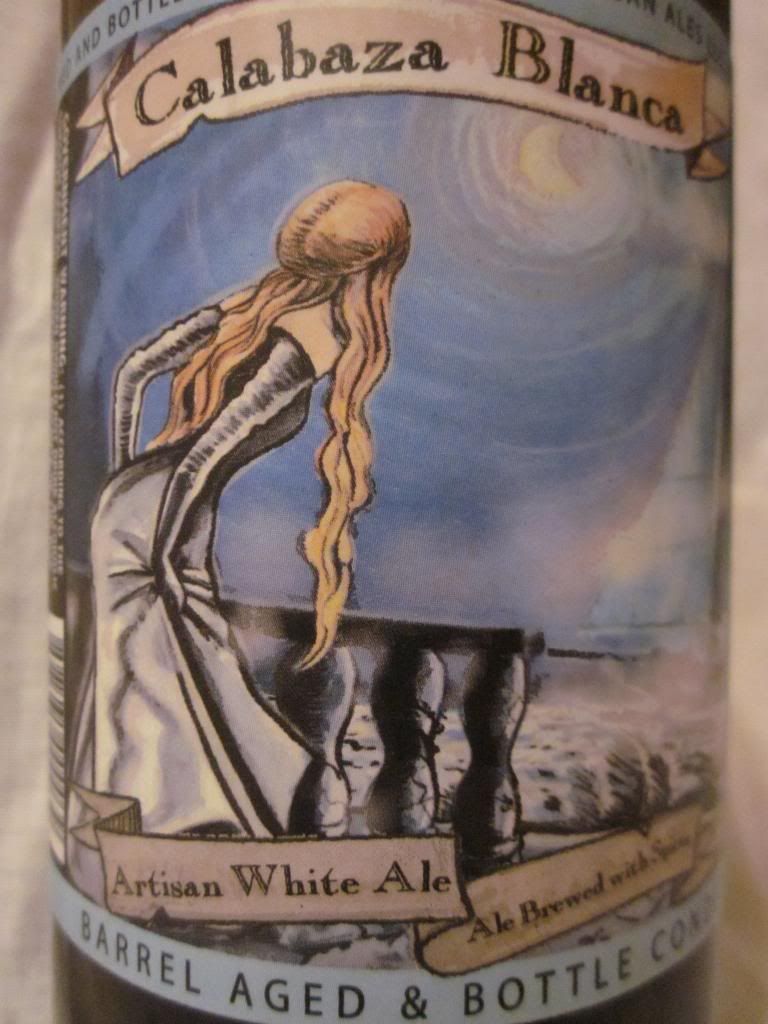
It's two days before "All Hallow's Eve" and what better brand of beer is there to review than Jolly Pumpkin out of Dexter, Michigan.  Not only does their name make them an obvious choice, but their often eerie bottle art and unusual flavors make them a brewer that stretches comfort zones and pushes the boundaries for many a burgeoning craft beer drinker.  Today's review will be for their "Calabaza Blanca" (translated:  "White Pumpkin"), an artisan white ale allegedly "brewed in Belgium's biere blanche tradition," according to the label.  Jolly Pumpkin tends to focus on open fermentation and barrel aging, so one comes to expect a bit of sour goodness when cracking any of their bottles.  This particular bottle is from batch 853 and was bottled on 7-28-2011.  Let's pour!


Aroma 11/12
My first whif from the bottle elicited a "Wow, that's funky!"  However, things settled much more pleasantly in the glass.  Overall, it is a very floral brew with a distinct sour note behind it.  The sour in the aroma evokes more sour green apples than it does the pungent orange peel used in its brewing, but that is not an unwelcome development.  A very earthy coriander complements things nicely... or is that a coriander that blends well with an earthy hop variety?  No matter, it all adds up to a classic gueuze type aroma.  Ooh, and the orange blossom floral qualities open up even more as the beer warms.  This is not a light aroma!  It's got some oomph behind it.

Appearance 3/3
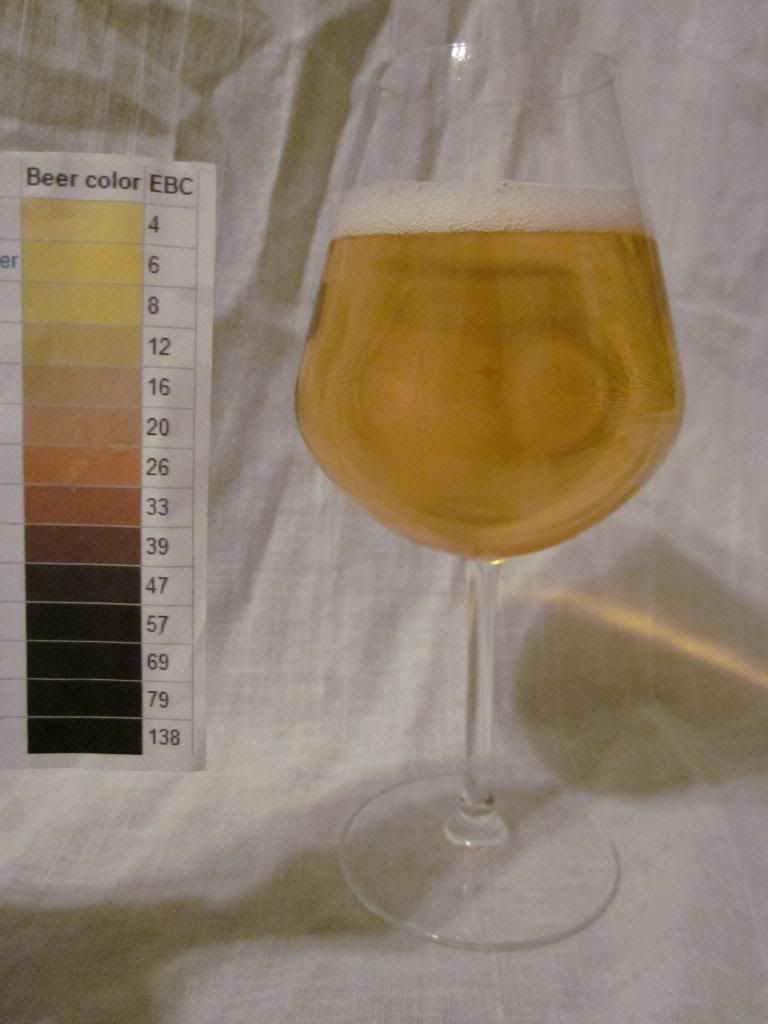
Everything on the mark for the style.  A bright, high clarity, sunshine yellow gleams in the glass and is capped by a noisy white head that fizzes quickly to a ring around the surface.  OK, so normally one expects some haze in a witbier, but with how long this bottle has been again all that sediment on the bottom is going nowhere.  The clarity and color seem awfully summery for this time of year, but I won't hold that against it.


Flavor 17/20
Wow!  The sour invades your personal space like an exuberant uncle at a family reunion.  The blast of intense lemony lactic flavor dulls when held in the mouth, as does the angrily aggressive carbonation, and one is left with the earthy, slightly bitter fragments of the sour-splosion that just occurred.  Unfortunately, little else takes place.  The bitter could just as well be from lemon peel as it could orange and any coriander spiciness is wanting at best.  The finish, of course, tends to emphasize the bitter a tad more than in the backbone of the beer, but that's about the only change.  It is of course ridiculously dry, but that is aided gradually by the sour left in the mouth that inspires a helpful dose of saliva.  Very tasty and not light on flavor, but extremely simple aside from the sour and earthy bitter.

Mouthfeel 4/5
The body in this beer is nearly nonexistent.  I mean almost water, people.  That is fixed a bit once the zealous carbonation has quickly died, but even then the beer can be called very light at best.  Normally, a carbonation level this high would interfere tremendously with the texture of the beer, but with a beer this light it really can't do much damage.  Any further negative effects of such high carbonation, even for a bottle conditioned beer, are lessened by the simple fact that the bubbles are so damned tiny.  I have no idea how they did it, but they did.  A mouthfeel like this and the accompanying low ABV of 4.8% lead me to think of this beer as more of a simple gueuze or a musty berliner weisse than any sort of white ale or witbier.


Overall Impression 7/10
This is well made, robust in both aroma and flavor, and definitely something for someone getting into sour beers to try.  Its body, sour flavor, and high carbonation all keep it a refreshing beer, while the low ABV and light body mean you could probably drink quite a few if the flavor wasn't so intense.  In fact, this brew is probably meant to be drank in quantity or popped like champagne, but its simplicity doesn't quite fit the bill as something to sit down and savor.

Total 42/50
This is a tasty beer.  Or rather a tasty sour champagne that is barely less dry than real champagne - and with less alcohol.  This is a refreshing change of pace from big IPAs and some of the pumpkin/yam beers of the season, but probably not enough to keep me coming back.  Ultimately though, it IS something that I would buy to show to my friends how different and unusual beers can be.  It also may be something that a drinker heavily into lambics could branch out to try.  Good work Jolly Pumpkin.  You've made a refreshing beer that doesn't skimp on the intensity of its flavor, but now I'd like to request some complexity.

Monday, August 19, 2013

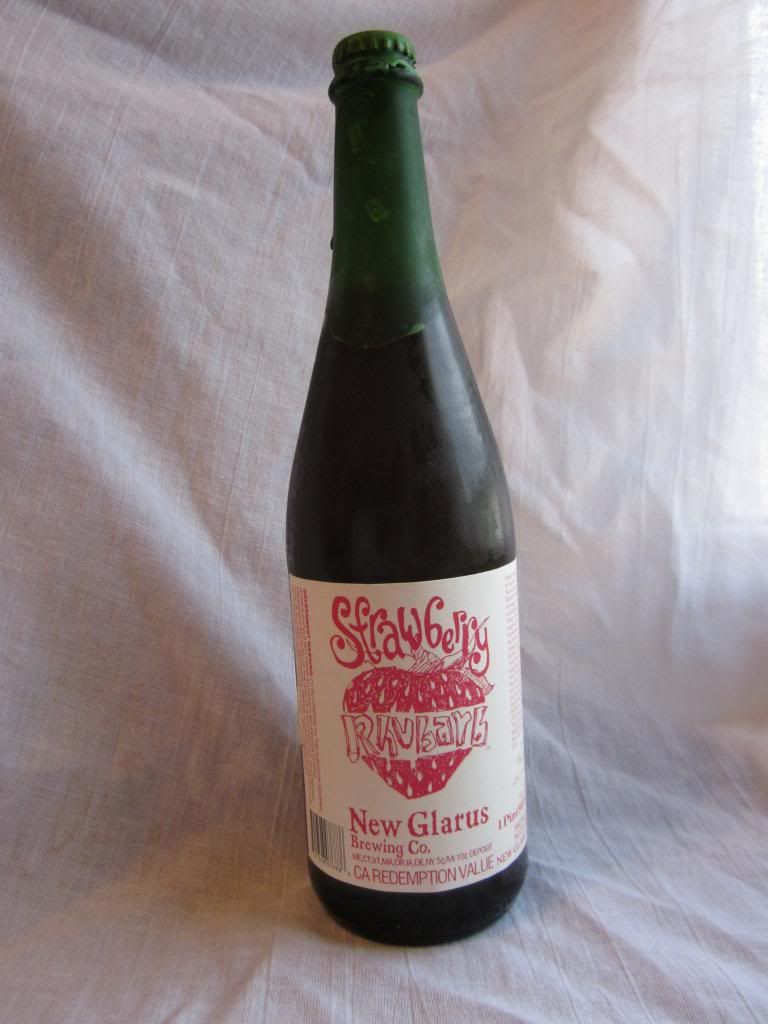
New Glarus - Strawberry Rhubarb

"The reports of my death are greatly exaggerated."


Even if it means I no longer get to dress like I'm 
from 1979.  Yes, that's my real hair and mustache.
Beer geeks!  Hello!  I've missed you all!  Between taking on some new responsibilities at work and being involved in some local community theater, I've barely had 30 minutes at home on any given day that wasn't spend shoveling food down my throat or preparing to enter/exit my bed.  Unfortunately, this is not nearly enough time to write the craft beer reviews that I like.  Fortunately, my obligation to the theater is ended and I now have my life back!  Actually, it was a great time, but I'm very glad to have some time again to write about and review amazing craft beer.

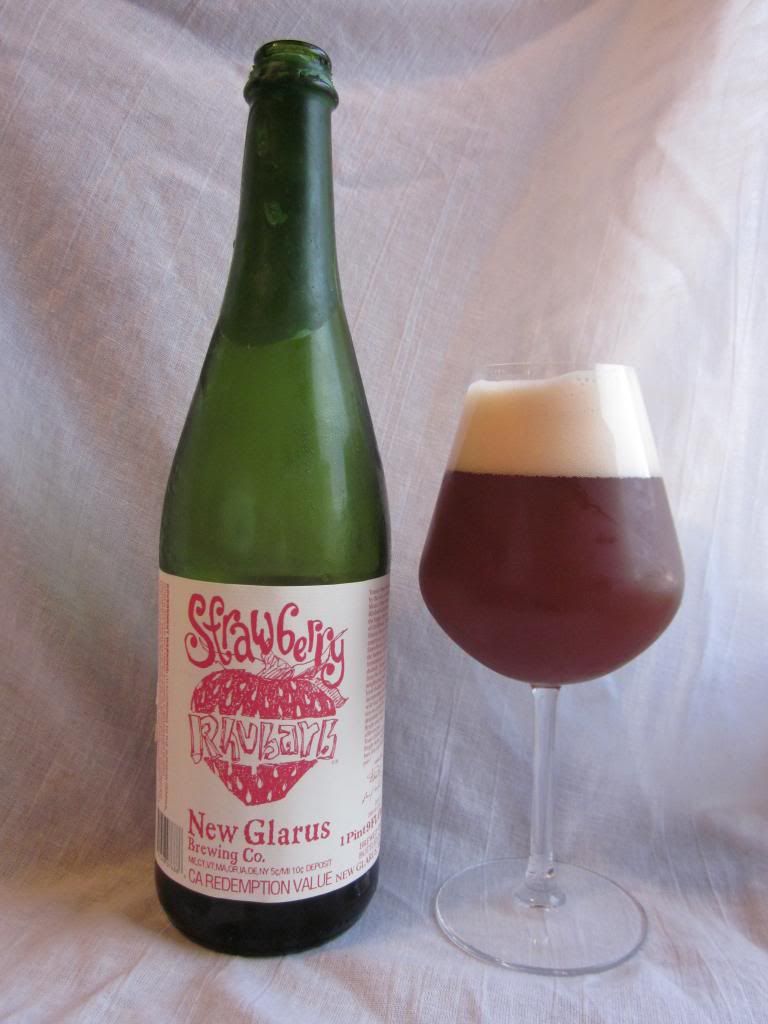
As good fortune would have it, my father MOTHER, who lives close to the Wisconsin state line, was gracious enough to pick up some of New Glarus' Strawberry Rhubarb for me.  You may consider me excited.  Rhubarb in the spring and early summer is a childhood treat that I recall quite fondly.  Whether it was in a rhubarb crisp, rhubarb pie a la mode, or just raw dipped in sugar from the bottom of a Dixie cup, rhubarb is a tart, sweet treat that absolutely sings summer.  Mixing it with strawberries, as if often done in pies, is also awesome, though since I can find strawberries much more easily than rhubarb, I tend to be a bit of a "rhubarb purist" and try to find it featured by itself.  I'm also excited because, duh, it's New Glarus and they make some of the best fruit beers that you will find.  Even when their normal fruit crops were low in supply thanks to an drought-inducing and uncooperative Mother Nature, NG produced their Serendipity and made splendid results with what they had available.  One of my favorite "fruits" AND one of my favorite brewers?  I'm ready to get this party started.  Let's pour!

I love how even the red ink and the green top emulate both
of the fruits that comprise this excellent beer.
Aroma 11/12
When this was first opened I could smell candy in the air.  Sweet, sugary goodness enveloped me.  I was wondering if it would smell any different when the nose was close, but it would end up not varying too greatly from what was first detected.  This beer smells very sugared.  Like the best Jelly Belly ever.  Do you want that in a beer?  Your call.  I'm a little wary of it right now.  I like fruit, but I'm not here to drink the equivilant of Kool-Aid that I used to make as a kid with an extra two cups of sugar.  I'm not too worried because this is new Glarus, but usually their aromas are the strongest part of their beer and while this is far from bad, all the sweetness makes me nervous.  The aromas of each fruit are detectable and with the rhubarb the sugar goodness ends up working pretty well.  It's easy to remember those sugar-carrying Dixie cups we had as kids.  There is an attempt at a balancing agent, though I won't go as far as to use the term "bittering agent."  The sensation is more akin to that of a black tea.  As this warms, it shows a hints of mustiness and reminds me of real, fresh strawberry juice from my juicing days.  I suppose that gives some additional credence to it being more "authentic," but it smells so unbelievably sweet!  However when it comes to New Glarus, it is easy to give them the benefit of the doubt regarding authenticity.

Appearance 2/3
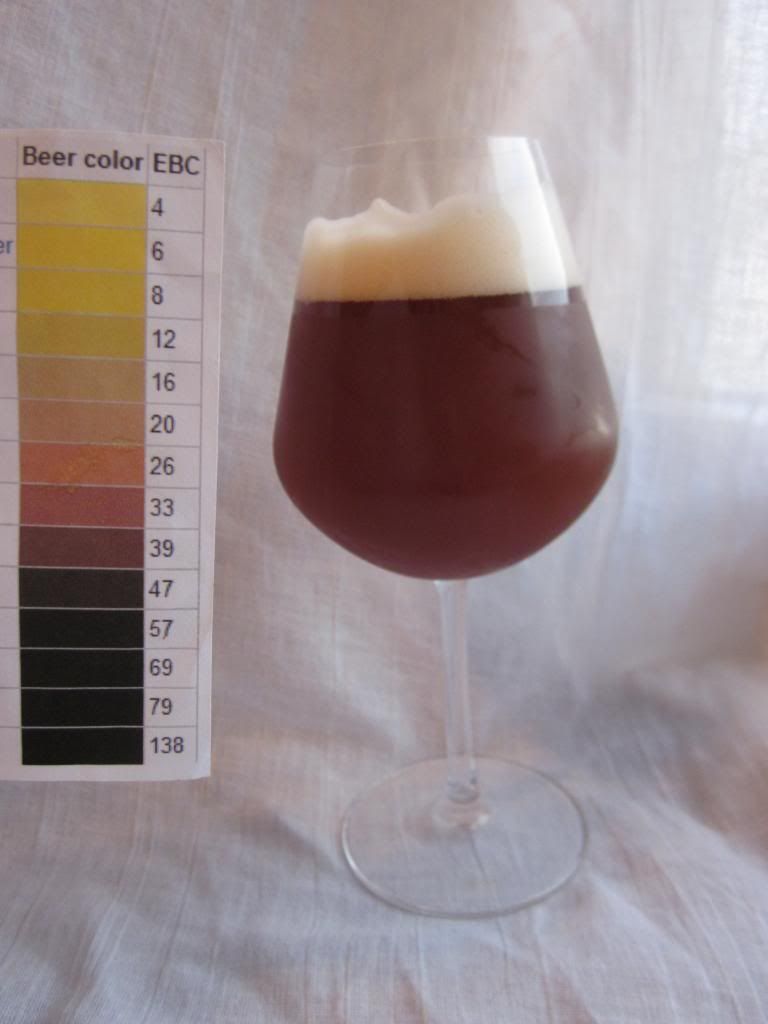
This looks pretty much like cider straight from the apple orchard after you've stirred up all the sediment in it.  For the most part, it's simply brown and cloudy, but New Glarus is full of tricks.  Hold it up to the light and you'll quickly see a glinting ruby with all but trace amounts of the brown leaving the glass completely.  Didn't see that coming!  The head is moderate in size, cream in color, dissipates rather quickly, but stays as a creamy covering on the surface.


Flavor 20/20
When you have a beer that contains such sweet ingredients as this, it's expected that when it first hits the tip of your tongue, you'll be hit with a very forward sweet flavor.  Expectation met.  Though in a brief rearranging of the expected order, the tart of the rhubarb comes forward first followed by the sugary wash of strawberry juice.  I suppose I would've expected the sweet sensation first given the placement of those particular taste buds on the tip of the tongue.  The tart makes room for the nectar-like strawberries with getting out entirely out of the way.  This two combine in the way they do in a well-made pie before turning to New Glarus' staple fruit beer finisher.  By that, I don't mean how the beer finishes, it just seems that if you hold a New Glarus fruit beer in your mouth they will all (Belgium Red, Raspberry Tart, Serendipity) resort to this darker, slightly more bitter flavor.  I wish I could describe it better.  I suppose it's like biting a bit too close to the core of an apple.  Still lots of the apple flavor that you expect, but just a hint of something bitter as well.  Only the sensation in the Strawberry Rhubarb isn't bitter, it's just... I don't know.  I just don't know what to accurately compare it to.  Perhaps the faint "tea" note from the aroma?  Do they age this in oak the way they do their Wisconsin Belgian Red?  Is it just the same malt base?  Are they again using aged Hallertau hops?  What is it?!?  I have a feeling that only Dan or Deb Carey can scratch this itch of curiosity, but if any of you awesome craft beer people out there know, PLEASE comment below!  The actual finish is a lingering tartness (no surprise there), that much like the beer when in the mouth, gives way to the "mystery flavor" in the aftertaste while the mouth is left with an unexpected dryness considering how sweet and tart the beer is.

Mouthfeel 5/5
As always, when it comes to New Glarus fruit beers, the mouthfeel is more than you expect.  They never miss a chance to dive out of the way of "average."  This brew successfully avoids the over bubbly and thin qualities that a lot of lesser lambics tend to find.  The beer, while ample in carbonation, provides it with microscopic bubbles.  This keeps the beer feeling lively in the mouth, but without the prickle of over-carbonation (or the burps).  It also lets the beer feel more substantial by allowing the drinker to feel more of the actual liquid than the bubbles, contributing to a heavier and silkier mouthfeel.


Overall Impression 10/10
It's a New Glarus fruit beer, what did you expect, a sub-par effort?  Other than an aroma that I basically couldn't convince my brain wasn't some crazy, new, amazing, Skittle flavor and a somewhat murky appearance, this beer earns top marks all around.  Strong aroma, well-blended and captured flavors, and a great mouthfeel all make this yet another fruit beer to find from New Glarus.  If you haven't had a New Glarus fruit beer, there's no excuse.  Make a friend in Wisconsin, trade them something amazing from your area, and get it.  If you want to drink world class beers, you can't miss them.

Total 48/50
I try hard to reserve high scores for beers that really "wow" me.  But how can you be wowed when you expect greatness?  It's like the honor roll student that brings home another report card full of straight A's.  "Great job honey.  Throw it on the pile with the rest of 'em."  But you know what?  It's still an A.  It's still another testament to continued excellence.  Some might say that this beer doesn't differ much from the other New Glarus fruit beers; that they just did it with a different fruit.  I say, "If it ain't broke, don't fix it."  Dummies.  More for me.

Keep making the good stuff NG, and I'll keep puttin 'em away.  Cheers!


Monday, July 22, 2013

Ska - Vernal Minthe

Some people simply don't drink stout in the summertime.  I may understand that reasoning after running a race, having done yardwork, or otherwise spending all day in the sun, but I fail to see the problem with a delicious stout simply because of a little heat wave.  A heat wave that has been mercilessly bashing the Midwest and East Coast with a fury of an axe-wielding Viking berserker.  Besides, Ska's Vernal Minthe even has the word "vernal" in the title meaning "1. of, relating to, or occurring in the spring. 2. fresh or new like the spring."  So they clearly don't want me to fall into the trap of only drinking beer styles during certain seasons, right?  Guys?

Oh, who cares when you drink a particular style!  I like stouts.  A lot.  I might knock over my own mother to get one (sorry, mom).  In case you couldn't guess today's review is for Ska's minty experiment in the stout world.  I'll tell you, they must be doing something right because I essentially have to battle my wife in a no-holds-barred, Jackie-Chan-meets-Jason Bourne-style battle, just for one of these cans every time I bring them in the house.  Let's pour!

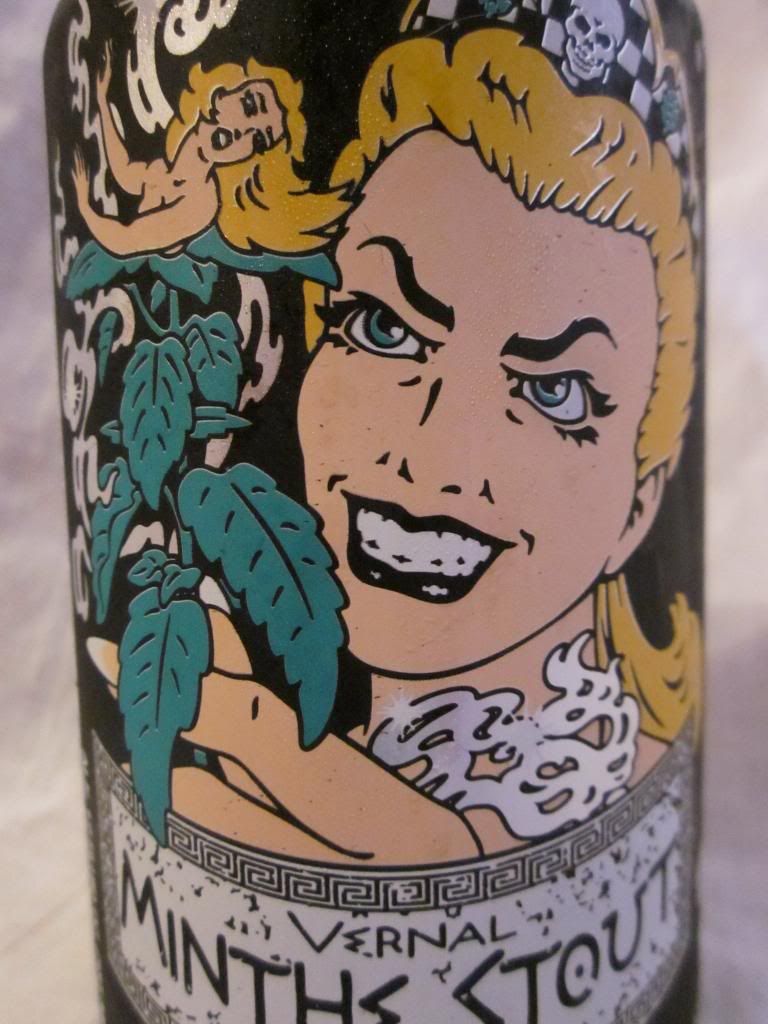
Some good pulp-like can art.

Aroma 10/12
Ever open a package of Girl Scouts' Thin Mints cookies?  Of course you have.  They're legalized crack.  Because you have opened one of those silver-wrapped, cylindrical diet wreckers, you can also imagine what this beer smells like.  Roasted malt is present first, but is quickly overwhelmed by the peppermint and spearmint.  The result is a cooling, menthol minty-ness that also manages to incorporate some darker cocoa aromas.  The mint cooling is the primary aroma, but it shows a healthy promise for the beer beneath it.

Appearance 2/3
It looks like a stout should, but I withheld a point for the lackluster head.  It was a nice tan color, but couldn't even raise a finger's worth of foam and died a death as inglorious as its birth.  This beer is all but black, with some dark coffee browns along the edge when held to light.


Flavor 18/20
The early combination of dark chocolate/cocoa notes and the bright mint, make the Thin Mints comparison an easy one to make.  Thankfully, that is not all the beer offers.  As it sits in the mouth the mint remains, but the cocoa tones begin to becomes a sweeter more molasses-like note.  It's sweet, but dark in a way that is appropriate to the beer's composition.  Lots of neutral malts also begin to appear, which of course offer little in the way of flavor, but in this case do help the beer transition to the finish.  Put the beer on the tip of your tongue to get a tingly, sweet sensation.  The finish is also a mint reprise, but with little else to combat the mint it becomes as fresh and refreshing.  Any lingering flavors are fairly light, but the omnipresent mint tingle along with some dark, almost charred, malts, and a bit of a peppery bitterness all come together in a pleasant echo of the beer you just enjoyed.

Mouthfeel 4/5
Ah.  So this is where they tried to make it a "seasonal stout."  The mouthfeel is not what one typically comes to expect from a stout.  The body is a solid "medium," but the carbonation is aggressive and prickly.  Maybe this is in concert with the menthol-like cooling of the mint somehow?  Is it just an illusion?  Eventually that carbonation dies a bit and the beer is smooth down the throat with a little bit of sticky cling.


Overall Impression 9/10
Not an "all the time" beer, but it certainly did what it set out to do.  It's not often that some of these "flavor experiments" turn out for the best, but this is one that has succeeded.  The aroma is spot on, the appearance is black and... well, that's about it, the flavor is distinct and harmonious, and the mouthfeel is pretty darn close to style.  It's a nice experiment that I'm bound to drink again one day and until then will undoubtedly use this beer in conversations of unusual beers.

Total 44/50
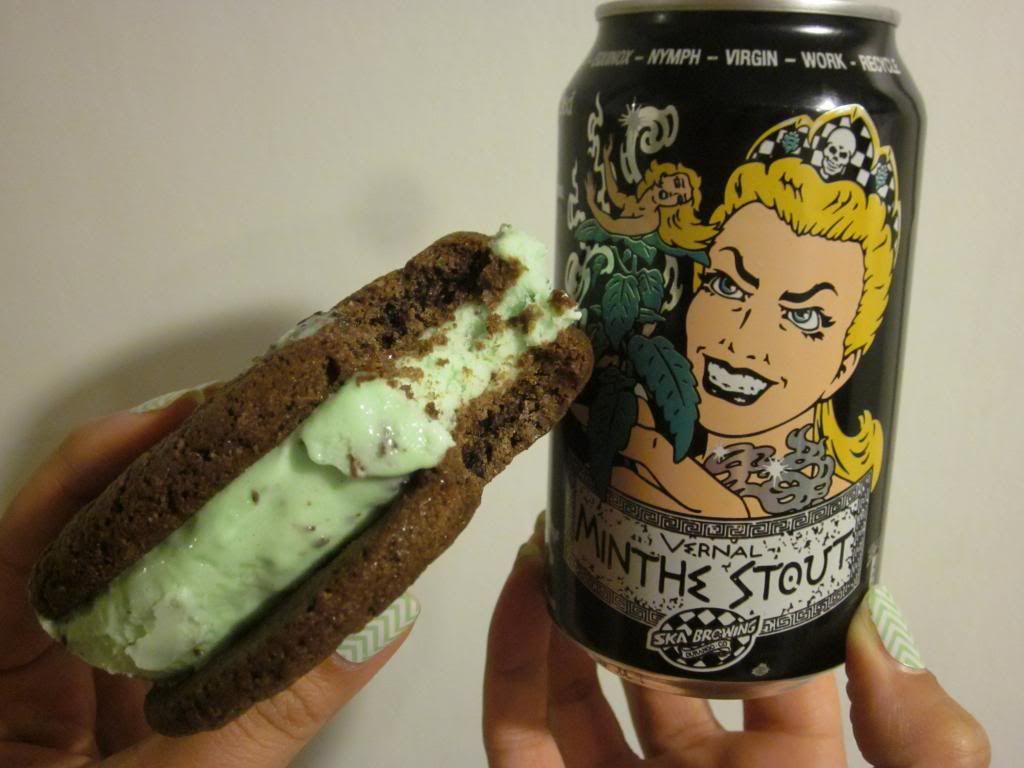
Not a bad score in my book, though this stout undoubtedly will have its detractors.  It's a distinct, unique flavor and that simply won't appeal to every single craft beer drinker out there.  Does it taste like a thin mint cookie?  Yes.  Has my wife discovered that it pairs insanely well with a mint chocolate chip ice cream sandwich.  Within moments of tasting it.  Can you drink this in any season?  Of course.  I've never had a stout with mint in it before, but after drinking this I wouldn't be afraid to try others' forays into the combination.  I claim this as a successful experiment by Ska!  They tried something different, did what they said they would regarding a new flavor, and it turned out pretty darn well.

Bad news:  having been released in the spring, if you can't find it in your area, you may have to wait until next year.
Good news:  There's still a lot of this out there and it shouldn't take a secret treasure map to find it.  I suggest you do.  It's always fun to try something new.

Perhaps my wife's new favorite food pairing.

Thursday, May 30, 2013

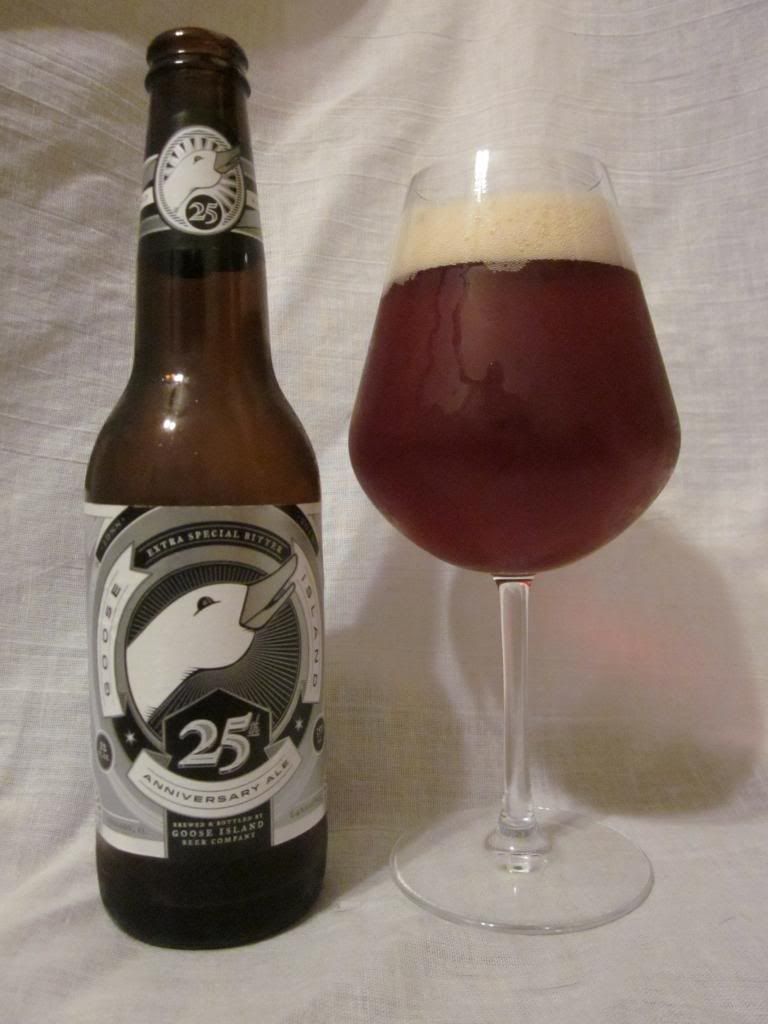
Goose Island - 25th Anniversary Ale

It seems a very good friend of ours is celebrating a rather special occasion.  That's right friends, while I might be late to the party there was no way that I was going to miss offering a hearty and well-deserved "Congratulations!" to Goose Island on their silver anniversary!  Twenty-five big years of holding down the craft beer scene in Chicago.  It wasn't always easy, but their persistence, dedication to quality, and determination to spread the craft beer gospel has paid off in spades.  Before I get this review started, if you haven't seen it already be sure to check out the interview with Goose Island Founder, John Hall.  It was conducted by cool guy and all around beer badass Nik from Chicago Beer Geeks.  Talk about an insane privilege!  All right, now let's see what GI has whipped for us for this festive event.  Let's pour!


Aroma 10/12
The first sniffs of the chilled brew are almost akin to a good German lager.  European hops are prominent with their earthiness and a delicate, fresh citrus that blends with it.  A faint but unmistakable pine note enters later as the beer warms.  The malts are barely roasted and bready with only trace amounts of caramel.  Not a powerhouse of an aroma, but they don't all have to be, do they?

Appearance 3/3
This beer absolutely sets the glass on fire with its bright reddish-coppers and orange hues.  Super high clarity and capped with a nicely contrasting ivory colored foam.  No movement from bubbles inside, but the head remains as a surface covering for some time and shows no sign of stopping.  Hold this one at arms length and look into it as you move it toward and away from a light source.  You won't be disappointed.


Flavor 17/20
A malt-driven beginning showcases some dry, crackery, and crystal malts.  Things get only a drizzle of caramel before a bitter fades in slowly as does a tart tinge.  The main backbone is a caramel/crystal malt combination with some spicy hops thrown in the mix.  Thankfully, the caramel's round, mellow sweetness increases as the beer warms in the glass.  The delicate hop citrus notes from the aroma have been made even less of a presence, but are still detectable.  Well, balanced but with an emphasis on the bitter as the style demands.  The finish actually allows the caramel to finish its say before washing it clean with a light, resinous bitter that makes the sides of the tongue tingle ever so slightly.  Aftertaste is more of the resin clinging to whatever it can.

Mouthfeel 5/5
I like this.  It's a moderate-full mouthfeel that helps you to ration out the beer and take your time.  Its lighter flavors would have you drink it more quickly and fall victim to the invisible 6.4% ABV.  In fact, the body is the only clue that you're getting anything other than a standard strength ale.  The carbonation is initially fairly aggressive, but slides deceptively into the hops' spiciness as it sits in the mouth.  It's a neat trick.  Somehow despite that nearly prickly carbonation, the beer swallows with a smooth and creamy finish.  There's a lot of neat stuff going on here if you're willing to pay attention to a characteristic that often goes unheralded.

Overall Impression 7/10
I suppose the beer does the style well: the English hops are well used in the "bittering only" capacity, the color is gorgeous and appropriate, it enjoys a caramel sweetness, and exhibits a sturdier body than expected while remaining quite drinkable (as most English styles demand).  For a reasonably priced sixer this beats out a lot of options that are available.

Total 42/50
This is not a bad beer.  It's not a knockout either.  Maybe Goose Island is brewing this as a tribute to one of their earlier beers and I don't know about it?  Note:  Upon further investigation, it is.  Click here.  I'd definitely purchase this over a lot of other beers available.  I might even use it to win over the adventurous few who are thinking of taking the leap into bitter beers, but aren't ready for stronger IPAs or American-style brews just yet.  I suppose that experiencing year after year of big ol' anniversary beers from any number of brewers I was expecting something a little more "special" from Goose Island on their 25th.  In hindsight, I appreciate the tip of the hat they are giving to their roots, and if I want something bigger I'll turn to a bottle of Big John or Bourbon County.  Also, since I haven't said it yet on the blog... big, huge, massive kudos to Goose Island for proving all the pessimists wrong and still brewing amazing beer after they were bought by AB-InBev.  If that purchase had any effects, they were all positive.  Goose Island's capabilities are expanded exponentially and AB-InBev has the ability to endlessly mimic a recipe, giving GI a consistent product even as their production happily ramps up to new levels.  I won't claim complete amnesty and say I wasn't concerned at all, but Goose Island has proved us all wrong and I've never been so glad to eat a bit of crow... er, goose.


Thursday, April 11, 2013

Homebrew Submission #1 - Winter Dark Ale

Hey everybody!  Today's review will not be the first homebrew that I've ever reviewed, but it will be the first one submitted to me for just such a purpose.  I could get used to this.  There's no "brewery" name nor even a name for the beer, but it has been enthusiastically made by someone that enjoys beer enough to brew it themselves and that says something about one's initiation, their dedication to the craft, and also to the finer things.  Thanks to my buddy Jim for ponying up 12 oz. of something he put his elbow grease into.   The only information that I have on this beer is that it is a "dark winter ale."  Shall we see what homebrewing prowess awaits us?  Let's pour!

I wish.
Aroma 9/12
True to style and nicely so.  This is a dark, malt-centered beer that has a healthy amount of dark fruit aromas.  Raisins and fig are easy to discern and are often a welcome addition to a nice dark beer.  Spices are next and, thankfully, avoid the pitfall of overwhelming everything in their path.  This is lightly spiced with nutmeg and a distant clove note.  An additional sweetness also comes through that cannot be attributed to the dark fruit flavors.  The nearest I can come to describing it is Belgian candi sugar.

Reviewer Confesstion:
All the previous sentences in the "Aroma" category were written while the beer was still relatively chilled.  Upon warming, the beer opens up and releases what I will at this time describe as a banana aroma.  Normally, I would associate this with Belgian yeast, but that would be a bit unusual for the style.  I question myself.  "Maybe it's the ripening bananas in the next room?  Naw, your nose isn't that sensitive.  Maybe it's that your nose is a little stuffy?  I don't think so.  That's never caused 'aroma hallucinations' before."  I can't deny what I find, but right now this seems to be shaping up to be a Belgian Strong and less like a traditional winter ale.  Not that I'm complaining mind you...  The latecomer aroma steals the show, but still lets the previous aromas maintain a supporting role.  Even later still this aroma disappears completely.

Appearance 3/3
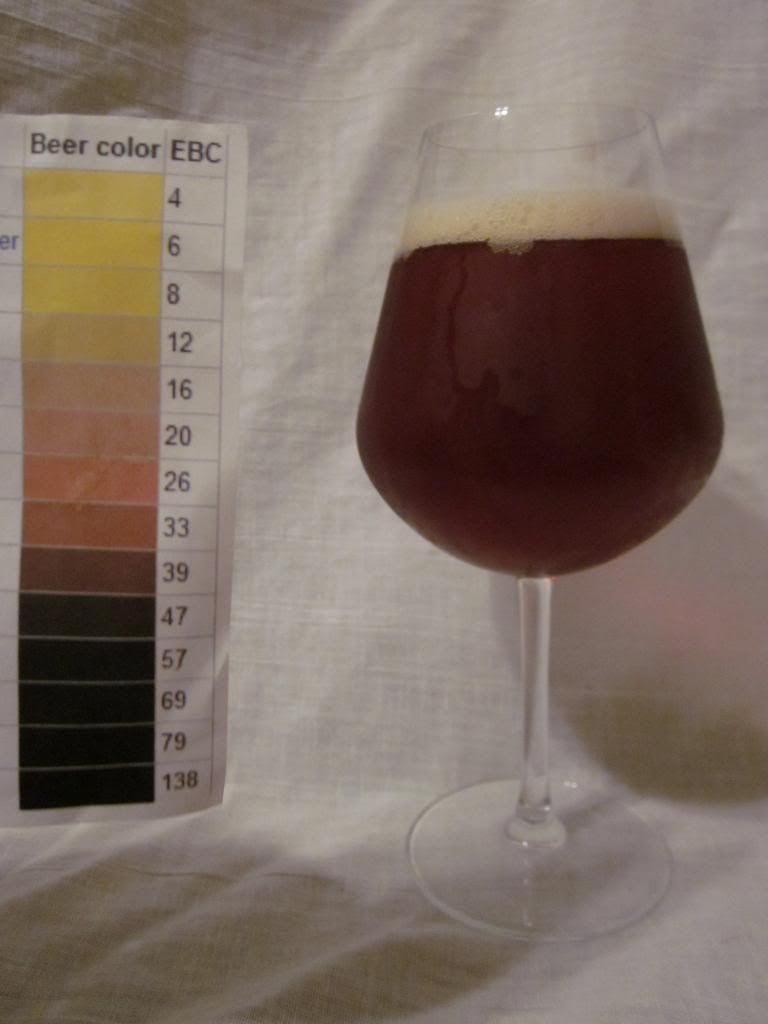
This poured much darker than I anticipated, especially for the style.  Most winter warmers and seasonals are a nice chestnut or maduro brown.  This brew, on the other hand, pours almost black.  When held to light only a brave few magenta glints show through the darkness.  It's not as black as say some top end stouts, but definitely more than a winter ale requires.  A nice surprise!  The head was the only weak part of the appearance.  It rose to less than a finger in height and then settled quickly as a almond colored ring around the circumference.


Flavor 16/20
The brew had set some pretty high expectations with the prior two categories, but doesn't quite match them in the flavor.  Far from saying that this is a bad brew, but it doesn't capture all the exciting nuances of the aroma.  After smelling, I would've expected lots of dark fruits, maybe a faint hint of warmth, perhaps some Belgian yeasty goodness, and all the sweetness that these things bring.  The beer instead introduces itself with darkly roasted malts, a light bitterness that one would associate with that, and a very distant hint of the dark fruits detected in the aroma.  The fruit flavors consist mostly of the flavor without the often associated sweetness.  None of the spice from the aroma is to be found.  The small amount of sweetness that does exist is nutlike behind the roast/bitter combo, but gives the idea of what this beer is trying to achieve.  The finish is a continuation of the nutty bitter, but eventually settles into combination of dark roasted malt and an appropriate bitter.


Mouthfeel 4/5
This has a very light mouthfeel in general and especially after considering the style.  Either the style listed (winter dark ale) or the style alluded to by the aroma would require a more substantial body.  Going by the style given, it would require a full-bodied, richer brew that also might not be afraid to be a little boozy.  Instead, this drinks like a nut brown ale in its body.  If the carbonation were a bit higher, it would be easy to confuse the two.  The bubbles of this beer would be perfect for a big, ol' winter ale by offering only the slightest of textures toward the end of the glass.  This is a unexpected find of  light, mouth-watering, refreshing brown ale, in what would normally be a more sturdy beer.  For those who like winter ale flavors, but not a big, heavy body (or booze) this would be ideal.

In that trusty, brown, label-less bottle.

Overall Impression 7/10
This is a hard beer to score!  It misses some major marks of its intended style, but picks up another style in the process.  If I were guessing based solely on flavor, I'd say a nut brown ale with some subtle complexities.  If I were taking a blind guess at this beer based on the aroma, I'd tell you a lighter version of a Belgian strong.  Another guess on mouthfeel would point me again toward a smooth brown ale.  On top of all this the beer remains remarkably drinkable.  I'd be more at home downing a few of these after raking some leaves in the fall than quaffing one with company in front of a winter-time fire.

Total 39/50
Does either one of the seasonal activities I mentioned in the previous sentence sound bad?  No.  Neither is this beer.  Just because I gripe on and on about how it misses its style, it still turned into a beer that I'd drink anytime.  In fact, with more carbonation this would easily be an above-average nut brown ale.  Note: This may be the only time I've mentioned a home brew being under carbonated.  If I am to consider this a nut brown ale, then I must give extra credit for having an aroma that far exceeds that style.  Also, this batch is pretty early in this particular brewer's career number of batches.  It's encouraging to see this early effort nailing some things that more experienced home brewers miss regularly.  Cheers to you, sir, and thanks for the bottle!  You're brewing better beer than I am.

Saturday, March 23, 2013

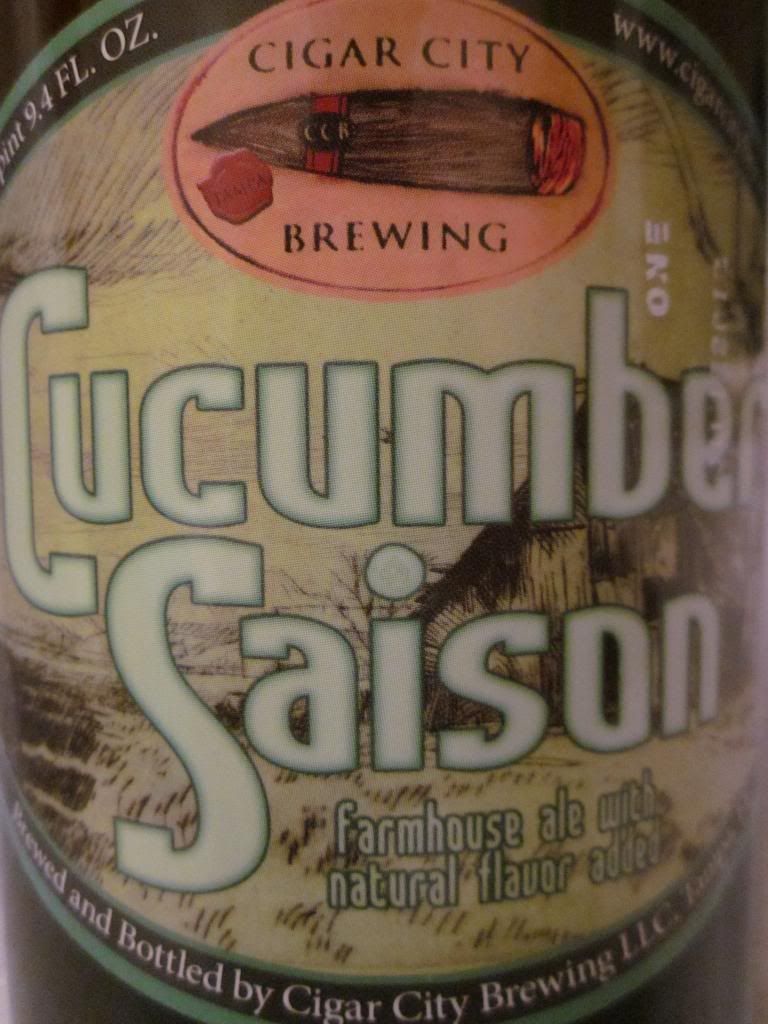
Cigar City - Cucumber Saison

If you've read a review or two on Sud Savant, you know I love a beer with a new and unusual ingredient!  Were it not for experimentation, how would we have all the styles that we enjoy today?  Today's review is for Cigar City's Cucumber Saison.  Today's bit of cuke knowledge is that it is a member of the gourd family.  This should suit Cigar City's talents well, as they also brew a seasonal pumpkin ale called "Good Gourd."  It is the only cucumber beer that I've ever seen, and one of very few that I've seen that involves an ingredient you might find in your grandmother's summer garden.  Other weird cucumber fact: they originated in India.  Now you know... and knowing is half the battle.  Let's pour!


Aroma 8/12
This bottle rudely spit at me the moment the cap was cracked!  The aroma on this is very vegetal, almost unpleasantly so, but certainly not in a flawed way.  Any of the typical aromas associated with a good saison style are buried far behind that wall of cucumber.  Granted, the aroma of cucumber is very authentic, it is mildly sweet and largely clean, but the closest this beer comes to a saison scent is that of a distant sour/citrus.  This acidic note tends to lean more toward that of a sour fermentation than that of sour fruits.  No pepper.  No hops.  No cloves.

Appearance 3/3
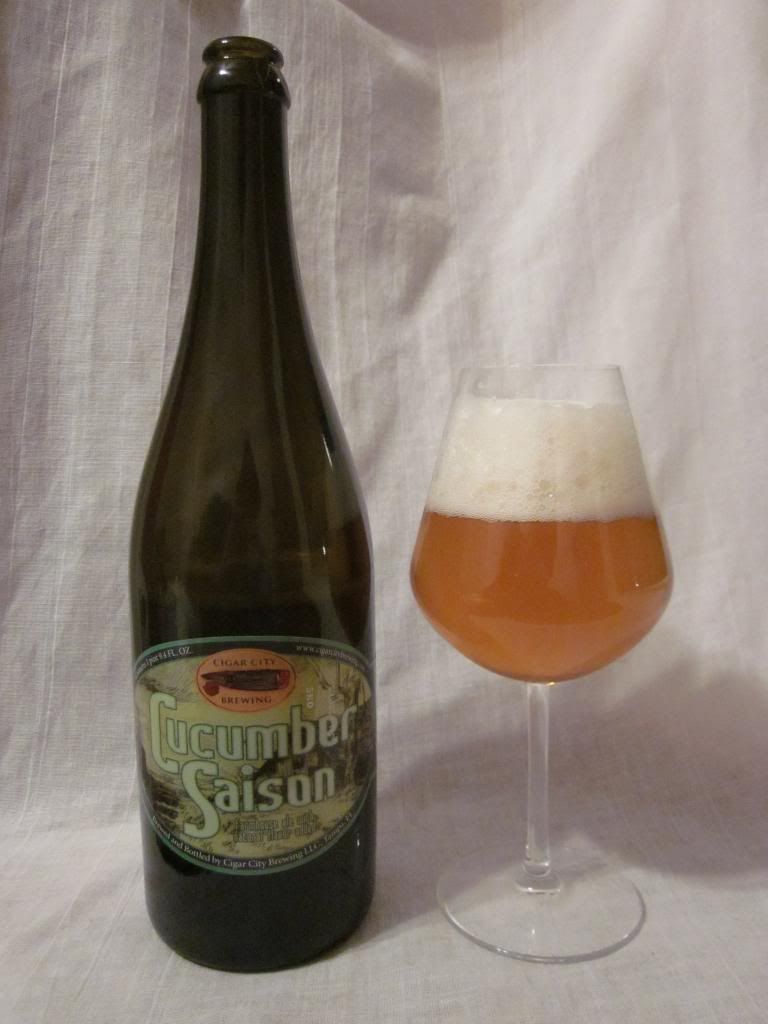
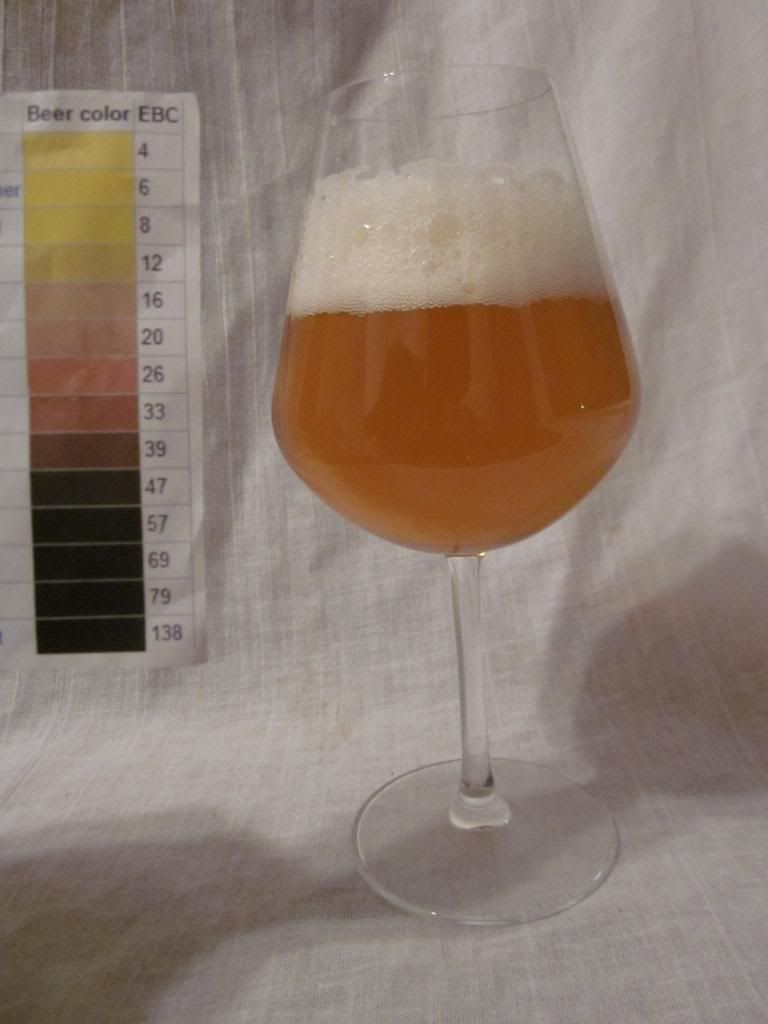
I should have inferred from the spitting cap that this beer would require a gentle pour.  However, I screwed that up adequately and the beer provided a very large, barely off-white head.  It left almost no lacing, but the bubbles do provide a lively appearance as they dance their way skyward through a bright, golden, high clarity brew.  This never truly allows the head to fade completely and gives it a long-lasting attractive appearance that nearly crackles like a fire as it dissolves.


Flavor 17/20
Things start as one might expect, with a veil of cucumber's sweet, clean flavors.  Other flavors are allowed to  speak out from behind this veil, even loudly, but none may push it aside completely.  It is pleasantly sweet, like home-made relish or like a distant, home-canned sweet pickle, but some of the flavors in the background are woody, slightly earthy hops and flashes of pepper.  They do not stay in the background for long.  They grow stronger not only as the beer sits in the mouth, but as it warms in the glass.  This is a very dry tasting beer thanks to those aforementioned hops and a crackery malt.  This dry, earthiness provides the same balance that a more bitter note would to balance the sweet cucumber.  One would expect the finish to allow those dry flavors to show through more, however, it is largely comprised of the cucumber's sweetness even if it seems that sweetness is ever abruptly ended by the woodiness.  The aftertaste, on the contrary allows for no cucumber sweetness and instead only presents a dry, lingering, and delicate bitter.

Mouthfeel 5/5
The brew's high carbonation is certainly its strongest characteristic in this category.  It is aggressively carbonated, which is not entirely inappropriate for the style, however I have never had a saison with this much gusto.  It is more like a mixer for gin than a beer on its own.  By the way mixologists, this beer would be phenomenal with gin, without so much bitter than tonic water typically offers.  It is moderately bodied, but only upon close inspection.  Normally, such a dry sensation in the mouth and high carbonation would have the drinker believe that they are consuming a lighter-bodied beer.  This illusion of a lighter body lends itself extremely well to the beer as a whole, keeping it as light and refreshing as the cucumber on which it is based.


Overall Impression 7/10
There are many strong attributes of a solid saison in this beer: its appearance that would not be out of place on a summer day, its aroma is distinct and strong, it would be unquestionably well used in beer mixology, its mouthfeel is excellent and correct for the style, and the cucumber flavor is distinct.  Too often a promised rare ingredient is underutilized or undetectable all together.  Cigar City has not made that error.  The criticisms of this beer are a simplicity that does not allow for some of the style's finer attributes to shine.  I miss the cloves and citrus, in both aroma and flavor, that can normally improve a good saison.  One could argue that cucumber has been used in place of the citrus, but I imagine a harmony between those two flavors would be better than either one alone.  The beer did not suffer horribly without the clove, as the pepper was still strong, but the clove is always a welcome layer of complexity.

Total 40/50
There is a lot of good attributes about this beer, but I'm just not sure it's for me.  The sour of a typical saison is not present, only the sour of a faint, sweet pickling.  I also miss some of the other typical saison ingredients, but won't cover those again.  Overall, it tastes like a highly-carbonated cucumber lager, but with the dry, crackery malts that are so often found in a well-crafted pale ale.  Unfortunately for cukes, they often carry such a clean taste that does not lend itself to particularly bold flavors, though they may be quite discernible.  I think that with a few supporting ingredients, providing they do not overpower, such as citrusy hops, cloves, and maybe some zest, this beer could truly be a knockout.  As it stands, it is a refreshing change of pace that I'm glad I tried, but there are likely other beers I will seek out first this summer.  Not that I have the luxury of such options, as CCB is not available in my area and this bottle was acquired in trade from my good friend Keith.  Thanks Keith!  And thanks to CCB for not being afraid to try new and gutsy things!


Wednesday, March 20, 2013

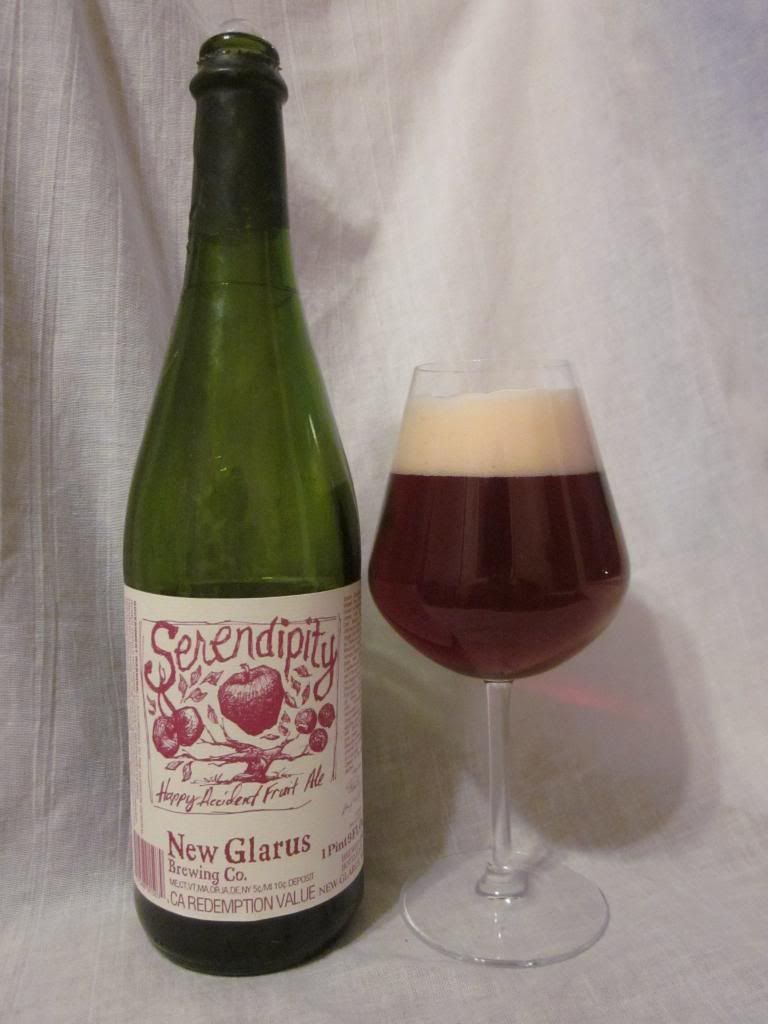
New Glarus - Serendipity

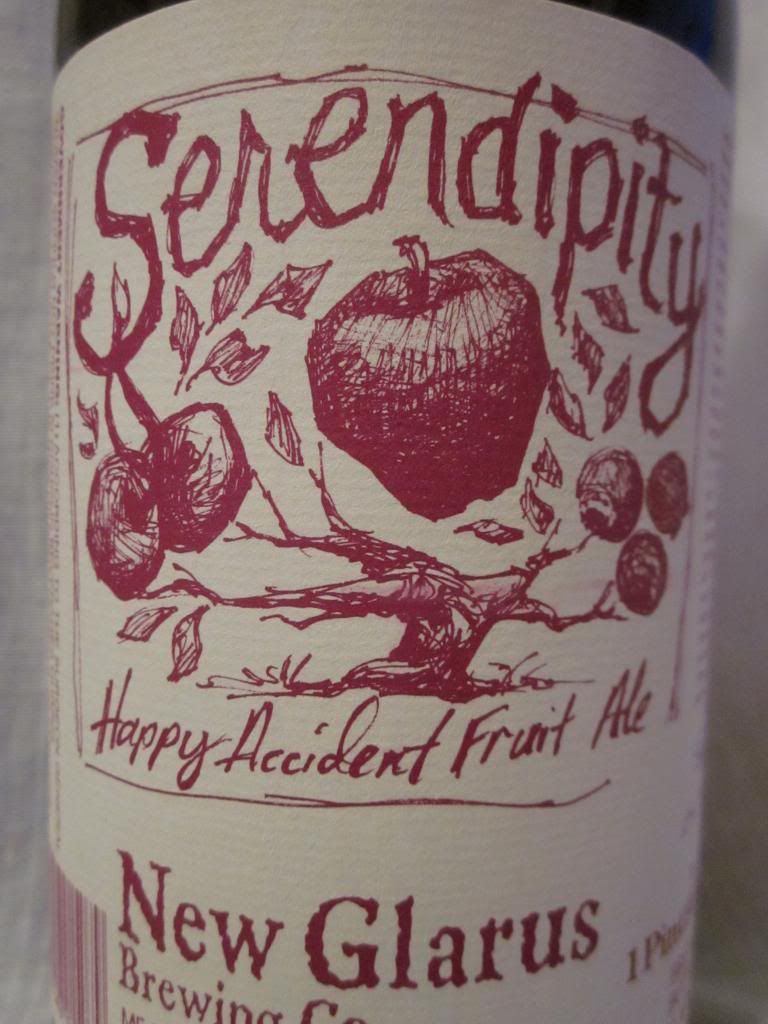
It's not often that I come across a New Glarus beer that I have not yet sampled.  However, when drought beleaguered the Wisconsin cherry crop, interrupting the brewing process for a world-class fruit beer, Diploma Master Brewer Dan Carey stepped in with his usual dose of inspiration and creativity.  Enter Serendipity.  Snatching up what cherries could be found, New Glarus blended them with some other grand Wisconsin flavors courtesy of a bumper cranberry crop and a harvest of apples that somehow pulled through the dry months.  The brew is then aged in oak barrels and left to ferment wildly, thus giving the brew's name its double entendre for both its fermentation as well as its makeshift ingredients.  Would we expect anything less clever from New Glarus?  I hope not.  Let's pour!

Aroma 12/12
This sprayed a bit when I was opening it, implying a feisty level of carbonation inside.  I then proceeded to smell the beer and my notes look something like "HOLYMOTHEROFCHERRY+APPLEAMAZINGIWANNARUBITONMYFACE!!!1!1!"  You know, more or less.  This smells like fresh-pressed cider from your local apple orchard blended superbly with cherry's tart bite and a hint of cranberry's patient bitter.  At this point I do not smell much of the sour ale within, but I'm getting plenty of the same dark cherry tannin smell that makes New Glarus' Wisconsin Belgian Red such a smash hit.  This is a beautiful bouquet with plenty of wow factor!

Appearance 3/3
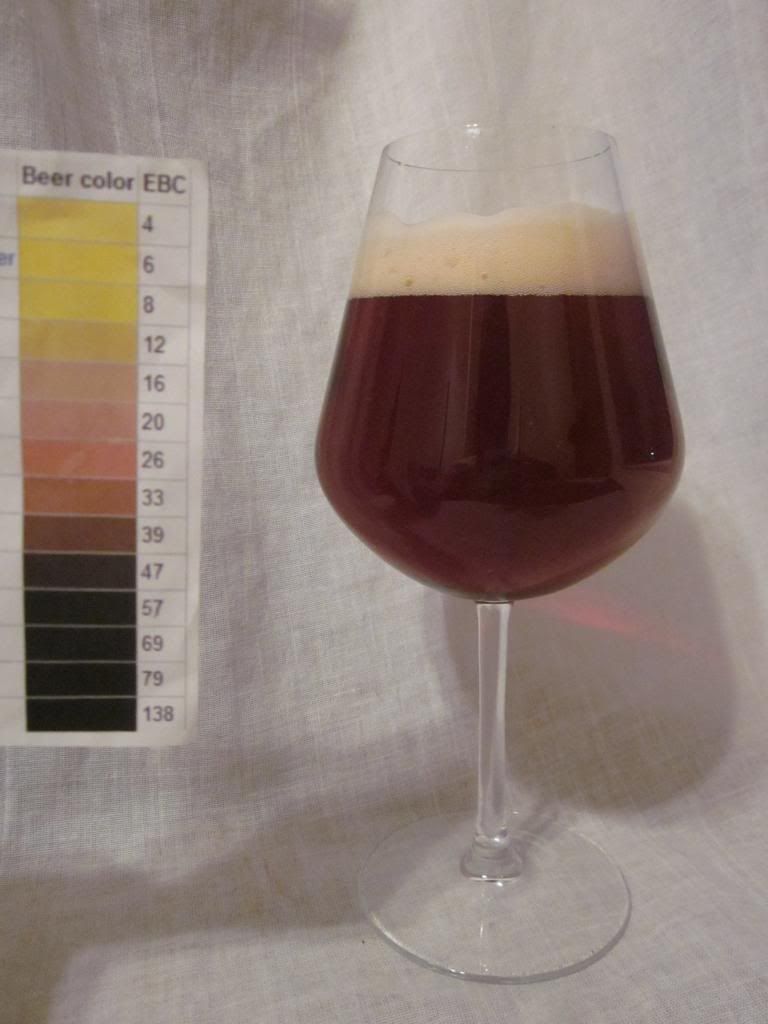
I was surprised at the generous level of head for this style.  It was microscopic bubbles forming a soapy texture that lived longer than I thought it would.  Sitting on the table the beer is a crystal clear, gem-like magenta.  When held aloft, the top takes the color of real apple cider, while the bottom becomes a vibrant sports car red.  I'm just looking at this glass and am so impressed that I'm shaking my head, my brow furrowed.  Good grief.


Flavor 20/20
Wow!  This is an amazing sour/fruit ale!  It definitely borrows heavily from their Wisconsin Belgian Red, but that's not a bad thing, especially if this beer is to be a substitute until better cherry crops can be grown and harvested.   Apples, sweet cherries, and tart cranberries abound, but soon the tannins take a stronger foothold and impose a bit of their "browned apple" flavor.  It may have been a bad year for cherries, but apparently the folks at New Glarus found the best in the batch because there is no shortage of cherry flavor here.  Well, there might be, but they have supplemented it so well with the other fruits that one can hardly notice and if they did they certainly wouldn't have anything about which to gripe.  The finish is more of the tannins, plus a subtle cranberry bitter that becomes a bit more bold once the other flavors have found their way down the throat.  Two things surprised me about the finish: First was that the cranberry bitter was so light.  For me, this is a good thing since I generally don't care for cranberries.  Second was the saliva gland-pounding pucker that this beer put on me.  After swallowing, my spit factories were cursing a blue streak and ordering all hands on deck!  This lasted well after the swallow and my jaw was tingling like mad.  Very neat!

Mouthfeel 4/5
Very light in the mouth, undoubtedly aided by the teeny, tiny carbonation that we saw comprise the head.  A beer this sweet could very easily become syrupy, especially after warming, but Serendipity avoids this trap with the liberal use of cherry tannins which help provide a bitter backdrop against which they splash their tart, sweet fruits.  The back of the mouth is left slick, but the beer itself never comes close to that sensation.


Overall Impression 10/10
Another excellent, world-class effort from the Careys.  They have gracefully traversed what will hopefully be a short gap between bountiful Wisconsin cherry harvests.  The aroma is second to none, the appearance is very appetizing, and the flavor is not to be considered a consolation at all.  In fact, I feel that it's so similar to their Wisconsin Belgian Red, that were I not told, I might not be able to tell the difference.  Of course, it's been a very long time since I've sampled that particular brew, but I feel that Serendipity doesn't fall very far from the tree (the cherry tree?).  If I am permitted one other nit pick it is that the beer makes the back of the mouth quite slick and sticky.
Total 49/50
I feel bad for noting those minor grievances with a beer that is so damn tasty, but that's why there is only one point deducted.  Sure there are things to improve on, but they are so minuscule that they hardly affect what is otherwise a completely pleasurable drinking experience.  For me this is a near dead-ringer for Wisconsin Belgian Red (thus its fourth reference in this review), but if I had them side-by-side I'm sure I would be able to discern their differences.  In case you couldn't tell, if you like other New Glarus fruit beers, you're bound to like this one as well.  Chalk this up in the category that can also be used to sway non-craft beer drinkers over to our team.  I suppose I was hoping I'd get something new and different from New Glarus, but I'm almost as happy that I did not.
Friday, February 22, 2013

Dogfish Head - Burton Baton (2007)

Today my quest to break out some of my weird an unusual beers takes me back to 2007.  It was a troubled time for America and I give you the following alliterative list to prove it:
  • Barbaro is euthanized
  • Bears lost the Super Bowl
  • Britney Spears shaves her head.  Gets new tattoo
  • "Breakfast of Champions" author Kurt Vonnegut dies
  • Boris Yeltzin dies
  • Bob Barker leaves the "Price is Right"
  • Boston wins the World Series
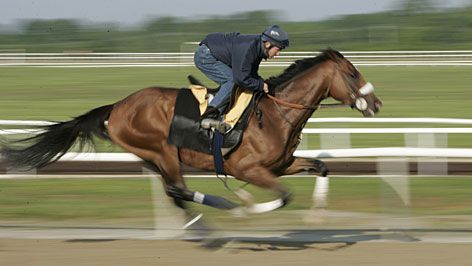
Gratuitous Barbaro pic.
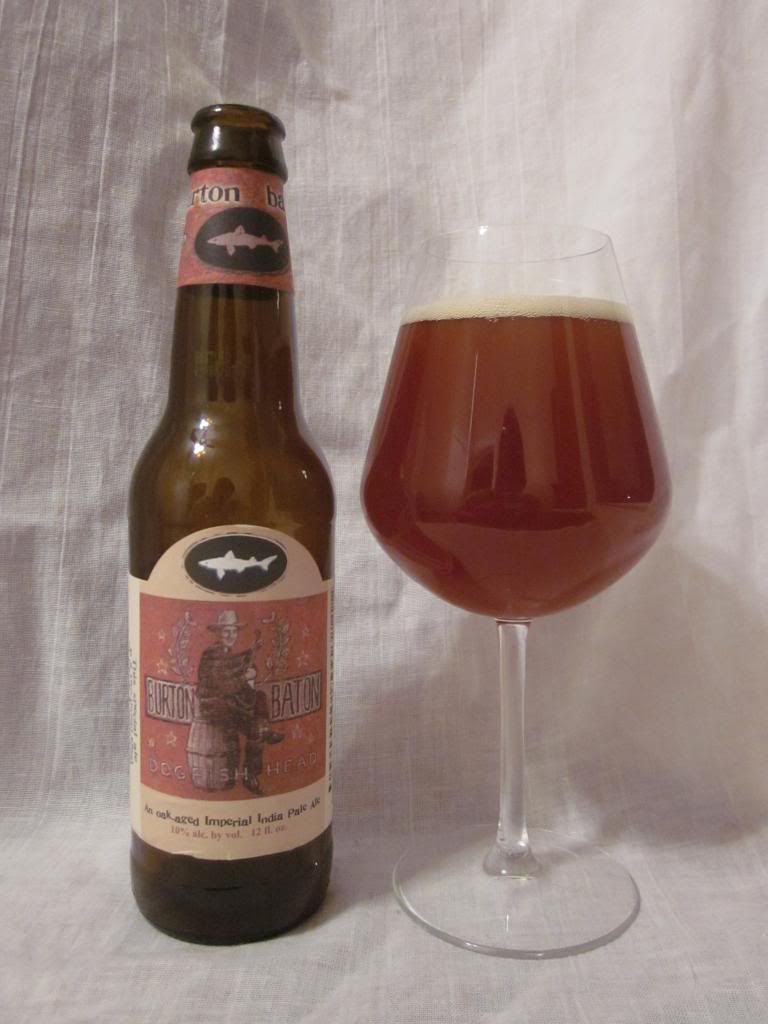
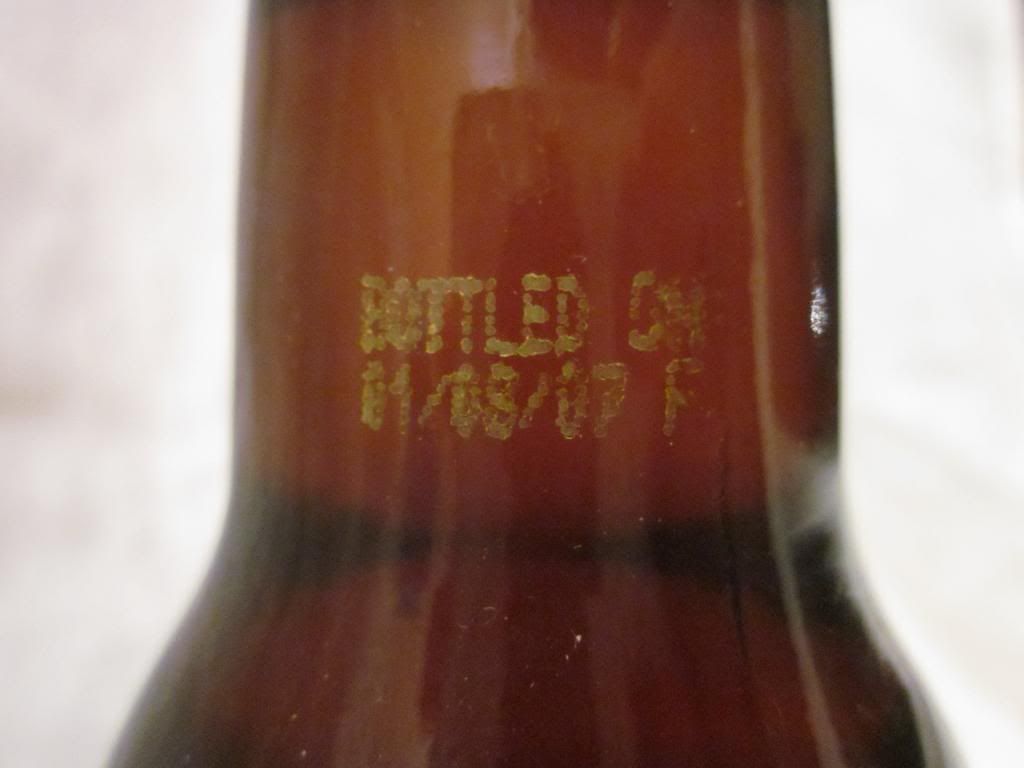
There were a lot of bad things, beginning with "B" that happened in 2007, but thankfully Burton Baton flew in the face of it all.  Having been brewed off and on since it's release in 2004, it eventually gained enough popularity to become brewed year-round.  Thank goodness.  It's labeled as an Imperial IPA, but Burton Baton is actually a blend of an DIPA and an English-style old ale, which is then aged in a big ol' oak tank.  Normally, I would not review an IPA or DIPA that is one month over 6 years old.  However, the bottle contradicts my logic by clearly stating, "Lush & enjoyable now, this beer ages with the best of 'em."  OK, I'll bite.  Let's pour!


Aroma 10/12
Oak notes are prominent, but nothing about this beer is harsh or aggressive.  The vanilla and oak touch the nose and bring with them some interesting travel companions.  A faded citrus is next.  It carries the remnants of juicy grapefruits and pineapple, but those fruity bits have all but disappeared completely.  Thankfully, we still have a slight acidity that gives the scent a bit of a bite.  The old ale notes come in after that and carry with them all the things we love about the style: sweet malts, a light roast, raisins, and a nice gentle warmth.

Appearance 2/3
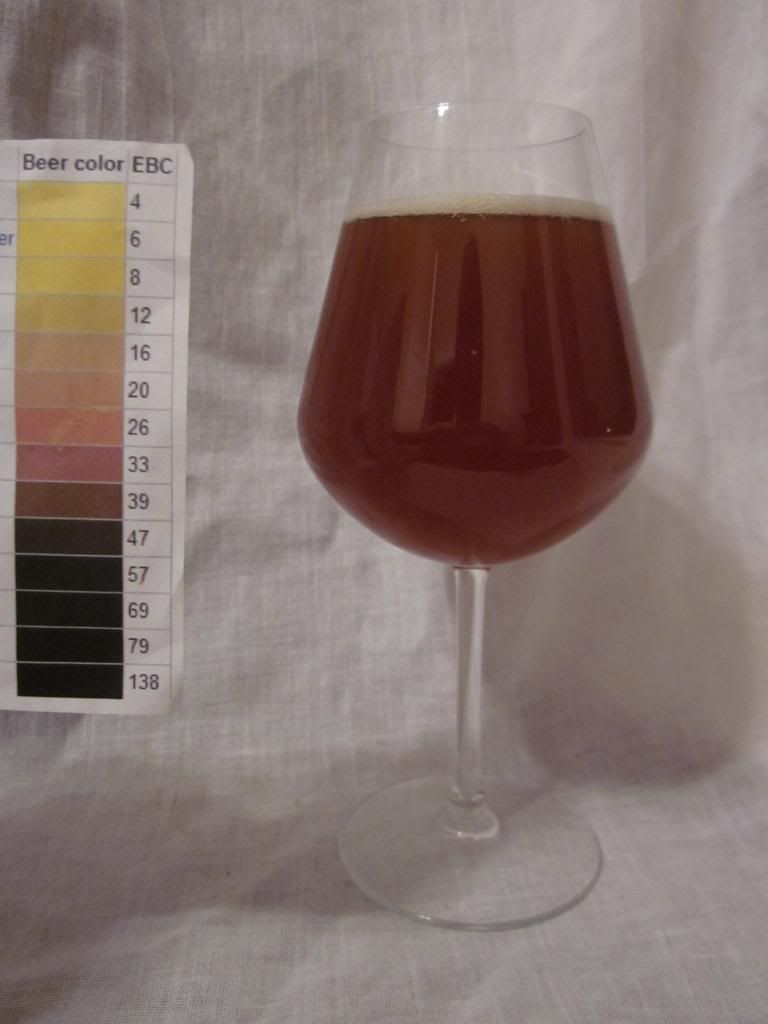
I'm not expecting the world when it comes to carbonation in a 6 year-old bottle, but I was pleasantly surprised at the half finger of head that formed after a fairly aggressive pour.  Unfortunately, the head was the high point for the appearance of this beer.  It sits in the glass the murky color of a sun tea that has steeped too long and grown too dark. Held up to the light an attractive red can be found in the center of the glass, but it is poorly situated amidst a fog of rusty hues.


Flavor 19/20
Whoa!  One is immediately lambasted by dark fruits, caramelized sugar, honey, a deceptively sneaky warmth, and a wash of malty sweetness.  There's no fading in here; this beer is sweet and it means it.  There is a richness of flavor that cannot be anticipated from the aroma.  I wish there were more to say about the backbone of the beer, but the flavors are so robust and well-blended that there is little opportunity for nuance.  If held in the mouth a pepper note arises, but I am uncertain if that another remainder of the hops or just alcohol tingle.  I swear that at times this beer even shows glimpses of maple syrup.  The finish shows a slight warming and a moderate bitter to show us that the hops cannot be forgotten just yet.  Both sensations linger well into the aftertaste where that pesky pepper note appears again as a dot on the horizon.

Mouthfeel 5/5
Excellent work here.  Not only is this beer smooth thanks to some barrel aging and some cellaring, but also thanks to gads of malt.  Remember the honey and syrup mentioned earlier?  Well, it's nowhere NEAR as thick as those, but it's just as silky and smooth.  Since we're on the subject, it definitely has a full body and loads of sugars to let this beer absolutely slide all over the mouth.  It avoids becoming to heavy and thick by utilizing perfectly present carbonation, alcohol warmth, and that peppery prickle.  The alcohol warmth, of course, gets stronger as the beer warms and helps contribute to a dryer finish.  Prior to warming no one would have a clue about the 10% ABV.


Overall Impression 9/10
This aged incredibly well.  True, the hops are not at their peak freshness, but that doesn't mean their hallmark cannot still be found 6 years after bottling.  The aroma was not the strongest trait of the beer, but the less impressive introduction made experiencing the rest of the beer an exciting surprise.  The flavor was intense and sweet and the mouthfeel was amazing.  This beer did great things with its dark fruits, oak, and camouflaged warmth.  What a treat!

Total 45/50
Silky without being syrupy.  Sweet, but not one-dimensional nor cloying.  What more do you want?  This beer gave big flavor without feeling like it was beating you.  I would definitely say that at this age it errs more on the side of the English-style old ale than an Imperial IPA.  It's abundance of sweet malt, dark fruits, color, and apparent ability to age well all point toward the old ale.  The aroma would indicate an IPA that is too old!  A beer that clings to its "big beer" status and former glory with a thick body, now unbalanced sweetness, and perhaps a high ABV.  Thankfully, it became much more than that over the last 6 years.  Maybe Burton Baton was one of the best things to come out of 2007.  It sure as hell wasn't James Blunt.

And they ain't kiddin'!


SOURCES:

http://www.dogfish.com/brews-spirits/the-brews/occassional-rarities/burton-baton.htm

http://usatoday30.usatoday.com/news/nation/2007-12-28-2419931004_x.htm

Wednesday, February 13, 2013

Hoppin' Frog - Barrel Aged Naked Evil

Today is a bottle that has been a long time coming.  I received it as a Christmas gift from my father and its name alone qualifies it as one of my more rare/interesting beers.  First off, it's barrel aged.  This is more often than not a good start to a great beer though far from a prerequisite.  Second, those barrels are whiskey barrels and not bourbon barrels.  Not that there's anything wrong with bourbon barrels, I just happen to be much more familiar with whiskey than bourbon, with few exceptions.  Third, this is a barley wine - a style that lends itself unusually well to being made into big ol' beers.  Fourth, it's a Belgian-style barley wine.  This is just another layer of complexity that I'm looking forward to having wash over my taste buds.  The bottle has this to say,

"On a recent trip through Belgium visiting the monastery breweries, we discovered an excellent barrel aged ale that had an incredibly satisfying flavor combination.  Aging in oak barrels added a memorable richness, that we seek to achieve with this barrel aged Belgian-style barley wine-style ale. Being the ideal celebration beer to release on our 5-year anniversary, Barrel Aged Naked Evil is fermented with both British and Belgian yeasts and aged in whiskey barrels for a lightly spicy twist on this old-world beer style.  Sweet malt flavors will become smoother and rich dark fruit characteristics will build with time to add a wonderful complexity and depth of flavor."


Aroma 12/12
I smell this and instantly feel like I should be in more formal surroundings.  You are immediately embraced by dark boozy fruits, raisins, vanilla, whiskey, and a lesser oak.  It is simply a fantastic blend.  As it warms the whiskey takes the forefront with strong tones of vanilla, toffee, a lesser oak, and a faint Belgian spiciness hidden in the back.  The dark fruits are still very present, but know their place.

Appearance 3/3
Pours like silk with very little head.  In fact, one wonders if they'll receive any head at all until it begins to fade in at the middle of the glass and slowly push its way to the top like a person newly awakened and slowly making their way through the first of their morning routine.  The ale's legs on the other hand are ridiculous.  They stick to the glass and show virtually no signs of falling.  The color is a bright copper with an abundance of ruby glints, sunset orange hues, and earthy reds.  Gorgeous.


Flavor 20/20
Oh my!  This begins in the same sweet fashion as the aroma with boozy fruits, but makes a gradual and seamless transition into vanilla, toffee, candi sugar, and more whiskey.  Somehow the oak is not completely subdued by all these imposing flavors and still manages to make its own small contribution.  Sitting in the mouth it continues to enjoy all those confectionery inspired flavors and ceased to be quelled.  The finish is like the smoothest, sweetest shot you could imagine.  Think high end, "no burn" whiskey, and caramelized hardened sugar.  Oh, but add amazing dark fruits and oak.  Enticed yet?  The aftertaste adds some bitter, but it appears to be a result of the dark fruits and alcohol, not so much that of hops.  Absolutely wondrous, rich flavor as complex as it is harmonious.

Mouthfeel 5/5
The mouthfeel was the first clue that this beer was not going to be Belgian-style in a yeasty, banana, bubble gun, clove, spicy kind of way.  It was going to be a Belgian-style in a quad, knock your socks off, highly carbonated, dark fruit kind of way.  Carbonation is initially pretty strong, but fades to a perfectly appropriate level; being present to provide texture, but never allowing that sensation to become too strong or to distract from the flavor.  It also never threatens to lighten the medium-full body.  Obviously, the whiskey provides some heat to the beer at 11.3% ABV, but again in congenial way where it never threatens to usurp the other more important flavors.  The spiciness incorporated by the brewers doesn't hurt one bit either, nor does the way it leaves the mouth sticky with caramel in the aftertaste.


Overall Impression 10/10
A masterpiece for Hoppin' Frog!  By far the best offering of theirs that I have ever tasted.  It is a rich, superbly blended cornucopia of Belgian quad goodness: active carbonation, dark fruits, whiskey heat, and smooth as you please.  Good gracious!  Can we all sign a petition so that they'll make this again?

Total 50/50
Well, Hoppin' Frog has joined the elite ranks as one of the few beers to earn a perfect score on Sud Savant. Deservedly so.  This beer is fantastic!  The barleywine style that they claim in their descriptor can be difficult to find sometimes, especially if the drinker is more accustomed to the more common "American Barleywine" style.  However, as a traditional or "English barleywine," this beer is a marvelous blending of styles.  It incorporates all the malty, caramel-laden, fruity, boozy, silky goodness that we've come to know and love and combines it with even more dark fruits, active carbonation, and spice from the Belgian style.  On top of that it throws in whiskey and oak!  What else could you want?!  The correct answer?  Some in your glass and then some in your stomach.  Top marks to Hoppin' Frog!  What a beautiful bruiser!

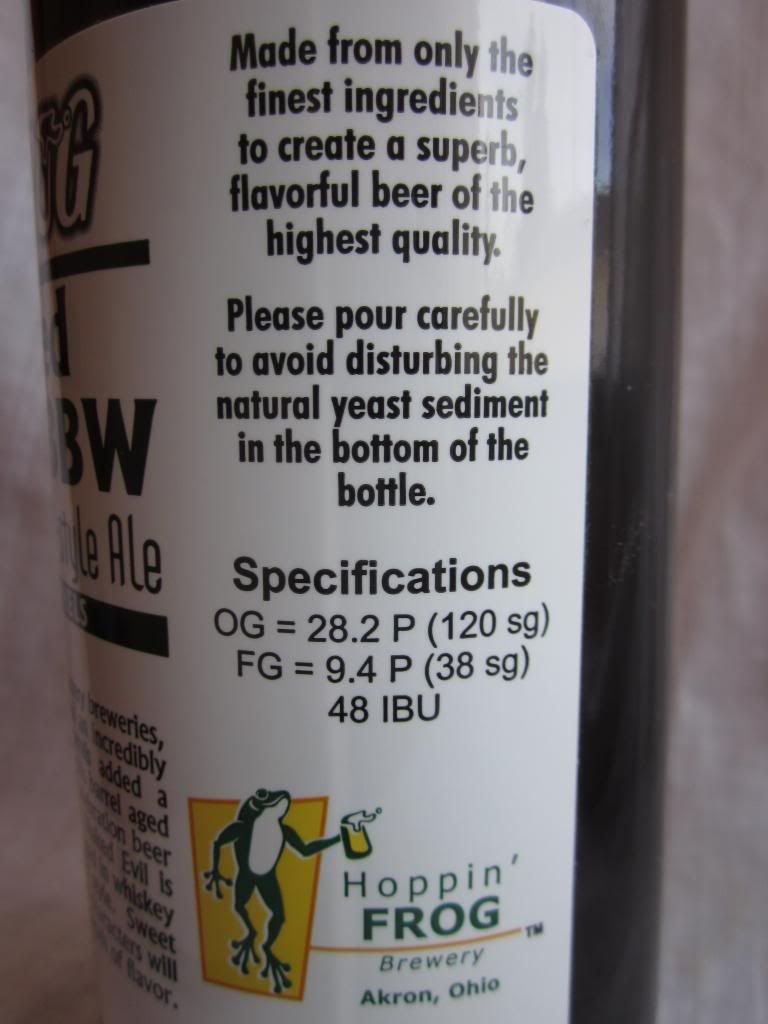
The specs.

Friday, February 8, 2013

Thank You

Fellow craft beer enthusiasts,

     Yesterday I was offered and accepted a new job!  It is with the Rock Island Auction Co., the nation's leading auction house for firearms, edged weapons, and military artifacts.  Essentially, I will be doing exactly what I have been doing here at Sud Savant.  They have hired me to write-up articles on upcoming auction items as well as manage their social media.  This is a dream come true!  Not only is the work something I am familiar with and enjoy doing in my free time, but the subject matter is also exciting and an area of personal interest.  This means two things:

1.  I am going to be spending most of my days on my butt writing about craft beer and/or guns.  In order for me to not gain 400 pounds, I should probably take up a diet of ice cubes, lichens, and on special occasions, lentils.

2.  It gives me a chance to say, "Thank you."  Without all of your hits, comments, "likes," trades, and ever-increasing readership each month, this opportunity may never have happened.  You guys and gals are iron-livered muses and just add more truth to the adage that "craft beer people are good people."  

To celebrate this job and to say thank you, I will be breaking out some beers that I have been holding on to for some time.  Most are expensive.  Some are exotic.  A few are just plain old.  In any case, I hope you enjoy reading about some interesting brews in the near future because I'm going to do my best to pull some fun stuff from the cellar and get to work.  I don't have the world's most exotic collection by any means, but hopefully it'll be something we can both enjoy.  So keep your eyes peeled, keep reading, and thank you.

Super stoked,
Sud Savant

Wednesday, January 23, 2013

Pretty Things - X Ale

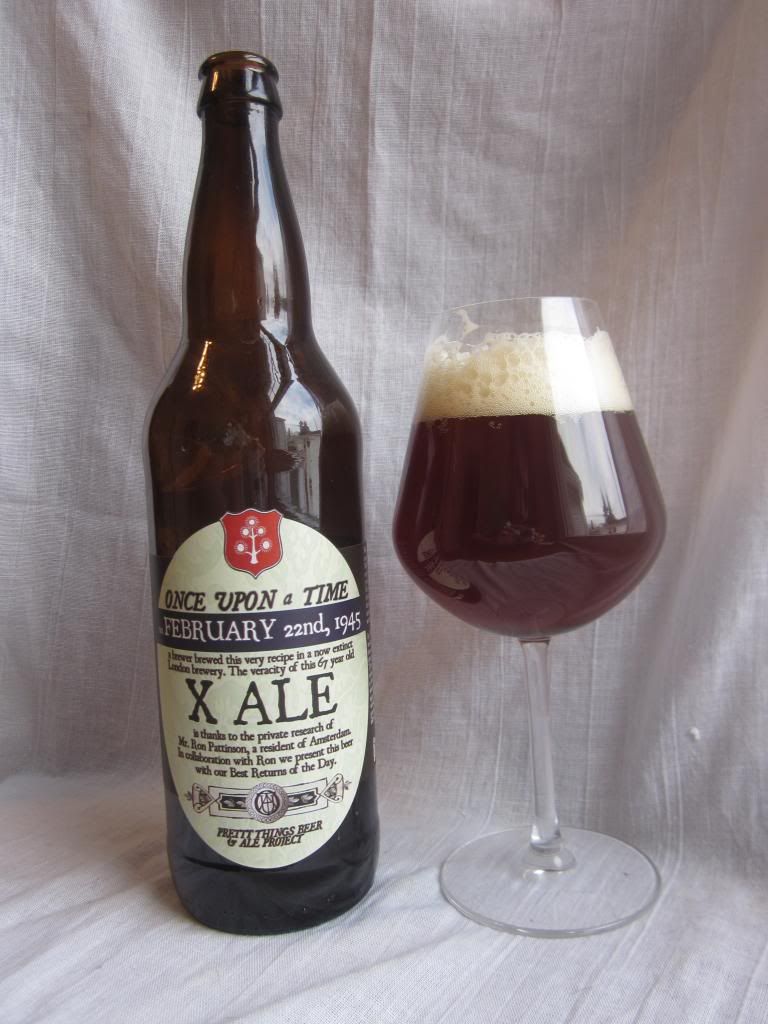
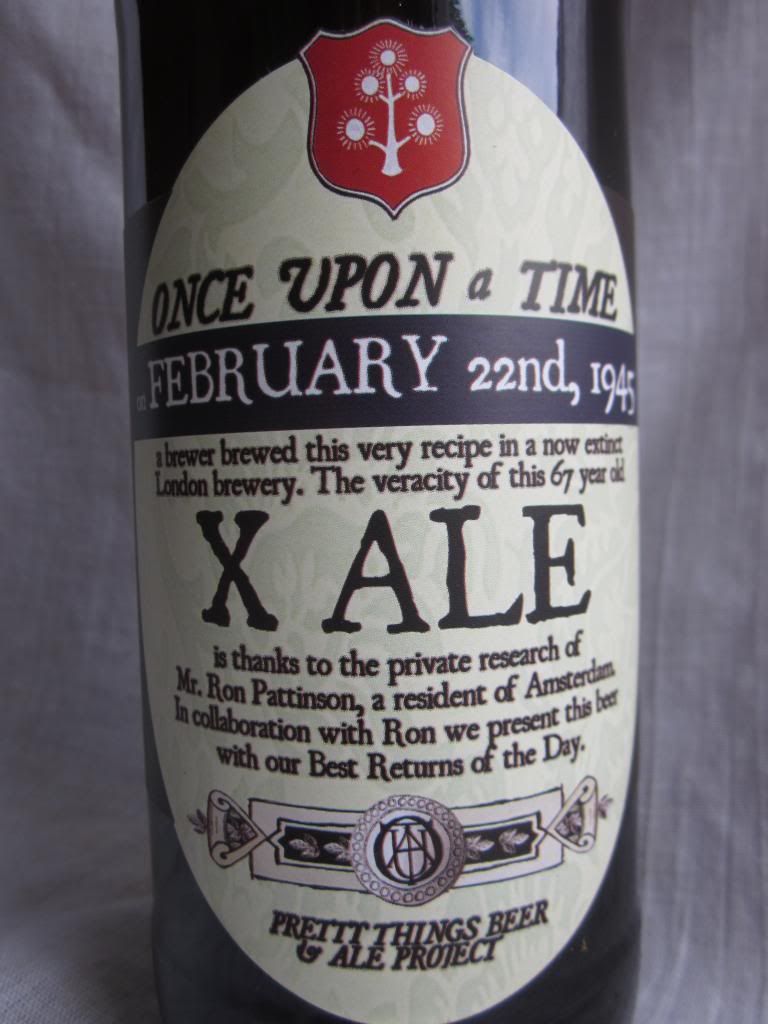
Let me first toss out a big ol' "thank you" to my wife who picked up this and several other bottles on a not-so-recent trip to Boston.  Normally, I'd never have access to this and I always appreciate something new and different.  Another reason I'm stoked to be reviewing this bottle is that it's a style of beer that I am currently unfamiliar with.  Zero experience.  Nada.  Thankfully, Pretty Things does a pretty great job of describing its history right on the label.  I shall reprint it here:

"Mild was a hugely popular style for more than a century (1800 - 1900s).  Here, we have released two Mild ales side-by-side: two beers from opposite ends of that period, brewed by the same brewery. If you drink both, you will drink the same brand from the same brewery, separated by 107 years.  Over those years, Mild changed considerably: something these beers amply demonstrate.  Though bearing the same name, X Ale, in character they could hardly be more dissimilar.

By WW II, Mild was firmly established as Britain's most popular style of beer, but the years had not been kind.  The wars years in particular had taken their toll on Mild, reducing its alcohol content.  There had been other changes too.  For example, the colour.  1945 X Ale was much darker, brewed from a blend of 5 malts and dark brewing sugar.  Wartime shortages also dictated the use of flaked barley.  This 1945 Mild contained just a fifth of the hops of 1838 version.  This is Mild as we know it today:  a low-gravity, lightly hopped, dark beer.  Drink the two side-by-side to see these changes in action.
                             -Ron Pattinson, January 2012

Also, I would be remiss if I did not include the thank-you note/history located on the front of the label.

"Once Upon a Time on February 22nd, 1945 a brewer brewed this very recipe in a now extinct London brewery.  The veracity of this 67 year-old X ALE is thanks to the private research of Mr. Ron Pattinson, a resident of Amsterdam.  In collaboration with Ron we present his beer with our Best Returns of the Day.

First batch brewed Feb. 22nd, 1945
This batch brewed Feb 14th, 2012"

It sounds like each version has its own benefits and while I don't have each one to do a side-by-side comparison I believe that investigating this historically researched brew for myself will be a neat learning experience.  Let's pour!


Aroma 8/12
Things are very malty here.  This is very akin to a sweet brown ale with cocoa and molasses as the main contributors.  A lactose sugar's aroma is also detectable.  Overall, this is a very simple bouquet, on par with beers that probably put forth much less effort in their brewing and their historic research.

Appearance 3/3
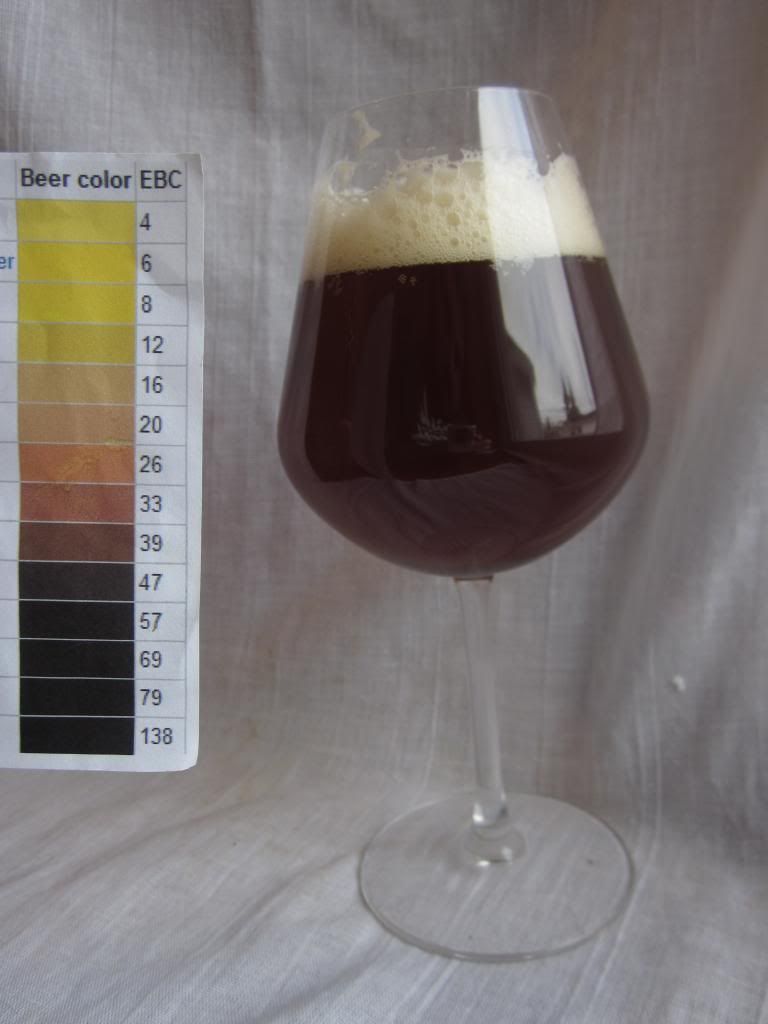
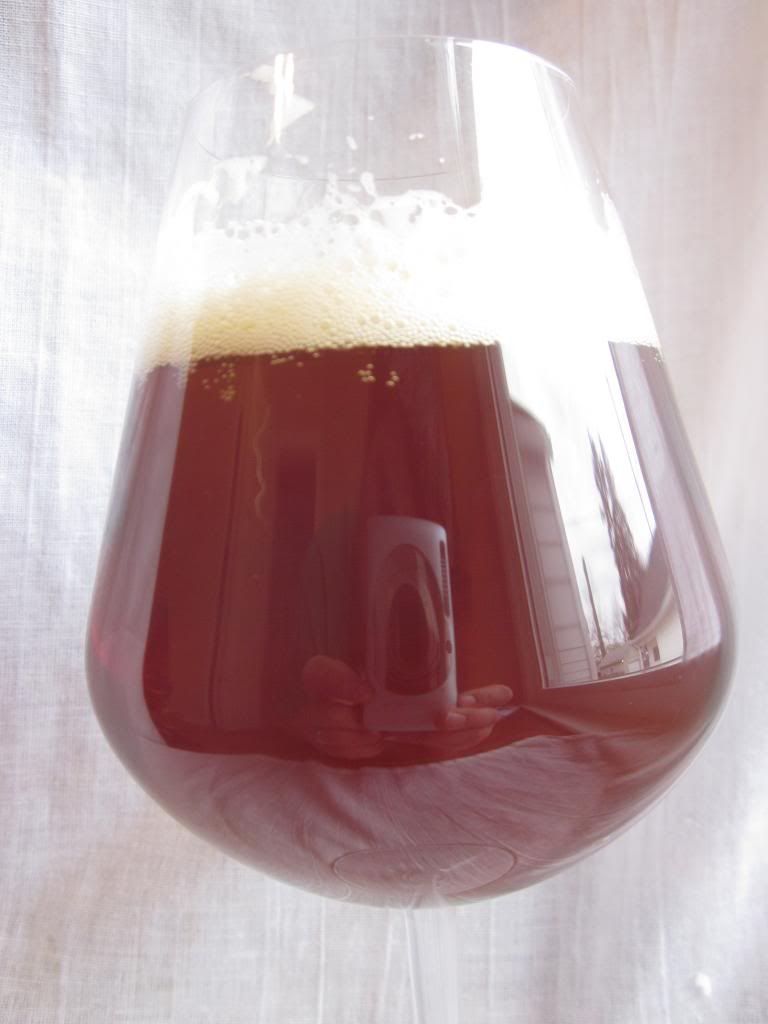
It certainly lives up to its brewer's name.  From the smell I was expecting a much darker pour, but was surprised to see it fall into the glass in a dark copper color, made to seem brighter due to its high clarity.  The copper also blends in its share of reds and magentas.  Be sure to take a moment to appreciate this one.  The head was excellent.  It's generous in size, egg shell in color, offers some lacing, and better than average retention.  Good work!

This was the first shot.

But this shot showed more true-to-life color.
Flavor 16/20
As much as the color was a surprise in the glass, the flavor is even more so in the mouth.  Things are not at all what one would expect when a bright, clean, citrusy flavor is the first in the mouth.  When sipped slowly, lots of neutral malts (crystal?) become apparent as well as a weak, watered-down citrus.  The beer is anything but dry at this point and certain to satiate thirst.  A quicker drink reveals more flavors, but it turns out that those are merely hiding in the finish as the backbone itself is quite lackluster for big flavors.  The finish on the other hand, is the high point of the beer.  It reverts back to the sensations in the aroma and gives a nutty, lightly bitter, dry finish with the roasted malts showing through and being a very nice addition.  The aftertaste is nothing much to mention other than a gently fading bitter from the finish and eventually a lingering citrus.

Mouthfeel 4/5
A light to medium mouthfeel is here, despite the malt emphasis.  The carbonation is abundant, but never comes close to prickly.  Instead, it serves as a texture and helps the mouth water through the dry finish.  The ABV is invisible and well it should be because further inspection of the bottle shows only a 2.8% ABV!!  Great googly moogly!  It's a small wonder that Brits could sit down and pound round after endless round with brews like this on tap.

For those not understanding the "great googly moogly" reference.

Overall Impression 7/10
So what's the overall impression?  I dig it.  It's like a refreshing brown ale or porter, but with much less body and definitely able to be consumed one after another after another.  Its shortcomings are the simplicity and lack of other flavors that other brews of this flavor profile have successfully incorporated.  Yes, the citrus helps keep things refreshing.  Yes, the bitter helps balance the malts while falling far short of overpowering them.  However, porter/brown ale flavors like this can also incorporate other flavors like molasses, caramel, dark fruits, brown or candi sugars, cocoa, or dark fruits.  I felt this stopped far short of its potential for flavor, even if the purpose it currently serves as a quaffable session ale is a noble one.

Total 38/50
It's difficult to give an unbiased review for this beer because beer has had such varying roles over the decades, let alone in different geographic locations.  I'm looking at this brew through "21st century glasses" and it was not made for that time.  For the current day and age, this beer feels light in flavor and watered down.  Today's priorities in the United States are on monster flavors to compensate for decades of flavorless macrobrews.  This results in intense flavors that often require the beer to be sipped and make it far less quenching.  Also, this beer is a British recipe.  Brits for many years placed a high value on highly sessionable beers because one could drink for extended periods of time and not become intoxicated.  Today's drinkers sometimes demand high ABVs in the brews to go along with the potent flavors.  It's clear that this beer is from a different century and from a different continent, but does that make it bad?  My vote is "no."  This is a version of brown ales and porters that provides those flavors in a lighter variation and can still be drank year round.  It's not a beer for today's drinker, but I believe that was Pretty Things' idea the whole time.  Cheers to Pretty Things for the history lesson on Mild ales, the trip to the past to actually taste one, and the character to not let old beer styles go extinct!


Saturday, January 19, 2013

New Belgium - Tart Lychee

The sour beer movement grows stealthily every day.  However, despite its recent press and critic acclaim I still have a rather difficult time finding many at my local bottle shop.  Granted, I live in midsize Midwest market, but it's still rather surprising to see Duchess de Bourgogne as the only sour beer staple inhabiting the shelves (OK, and technically the lambics).  For those unfamiliar, "sour beer" refers to those beers that are fermented using wild yeast of bacteria strains.  As their genre name implies, they often have a sour, tart, and/or acidic taste.  Typical brewing avoids these "contaminants" at all costs, but in sour beers they are welcomed.  Some common characters used in brewing sours beers are Brettanomyces (a.k.a. "Brett"), Lactobacillus, and Pediococcus.  Though the latter two are often known for their contribution to other foods besides beer: sauerkraut, yogurts, cheeses, pickles, cider, wine, kimchi, and sourdough bread to name a few.

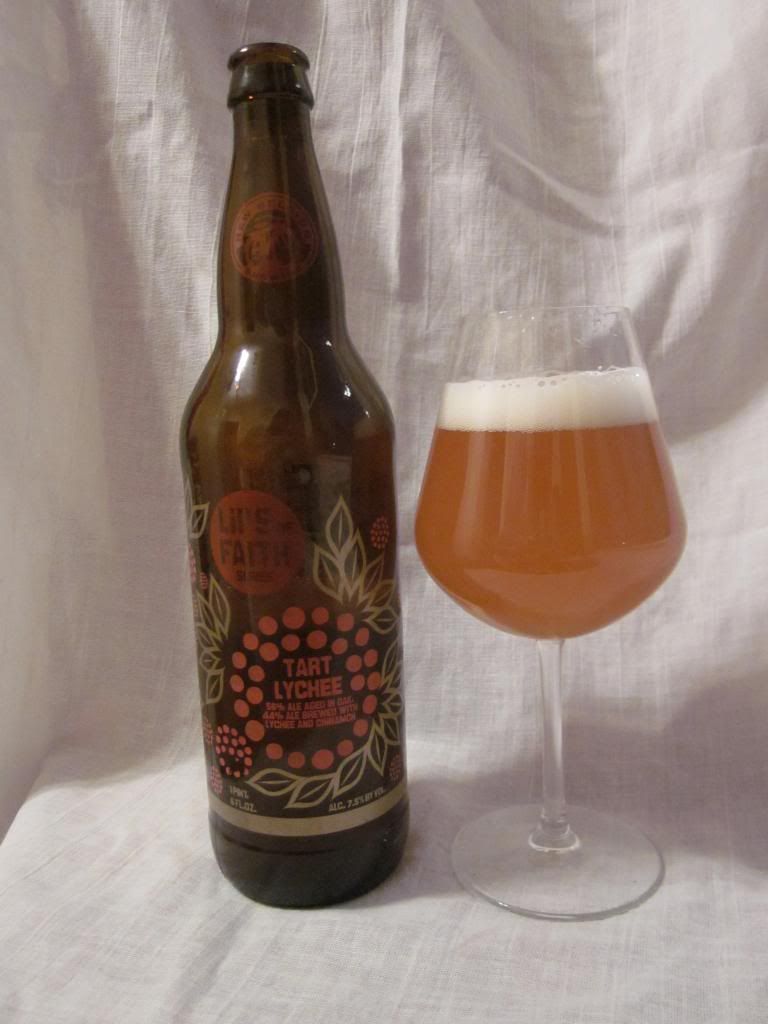
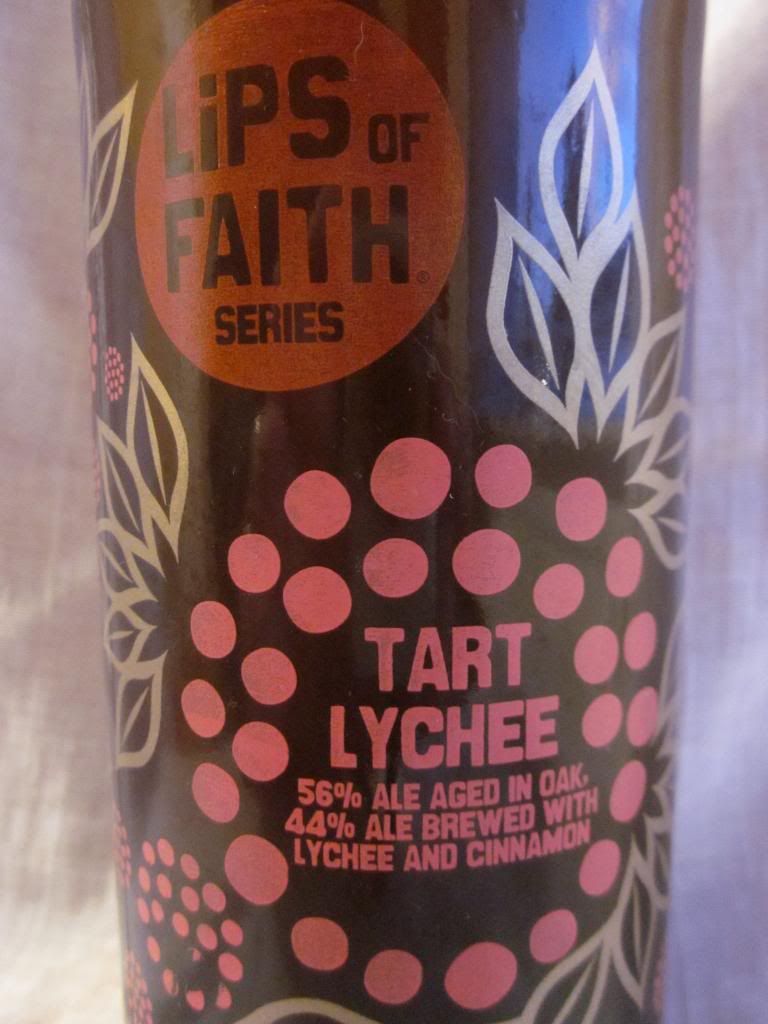
Tart Lychee is beer that definitely steps outside any standard genre.  It is a sour ale, or American Wild Ale to be specific, with 56% of the ale aged in oak and 44% brewed with lychee and cinnamon.  Despite its pink exterior accents and sweet sounding ingredients, it still hefts a 7.5% ABV.  I'm excited to see if this beer will be a sweet treat or something with a little more "oomph."  Let's pour!


Aroma 10/12
Things begin, respectively, with a dusty barn smell, a note of the acid, and way back is a sweet, nectary fruit.  A little time to warm in the glass yields much more of the sweet, nectary smell, which has now morphed into a strawberry Starburst/pink Kool Aid type sweetness, and it is battling with the sour acidic aromas.  The acid does a superb job of balancing what appears to be a rather unyielding sweetness.  It also lends a bit of dryness almost like a champagne.  Overall, it's a very nice trifecta of sour, sweet, and dusty horse blanket.  Much to my surprise the cinnamon and oak are undetectable at this time.  Further warming erodes the sugary sweet note and leaves mostly the sour note to stand alone.

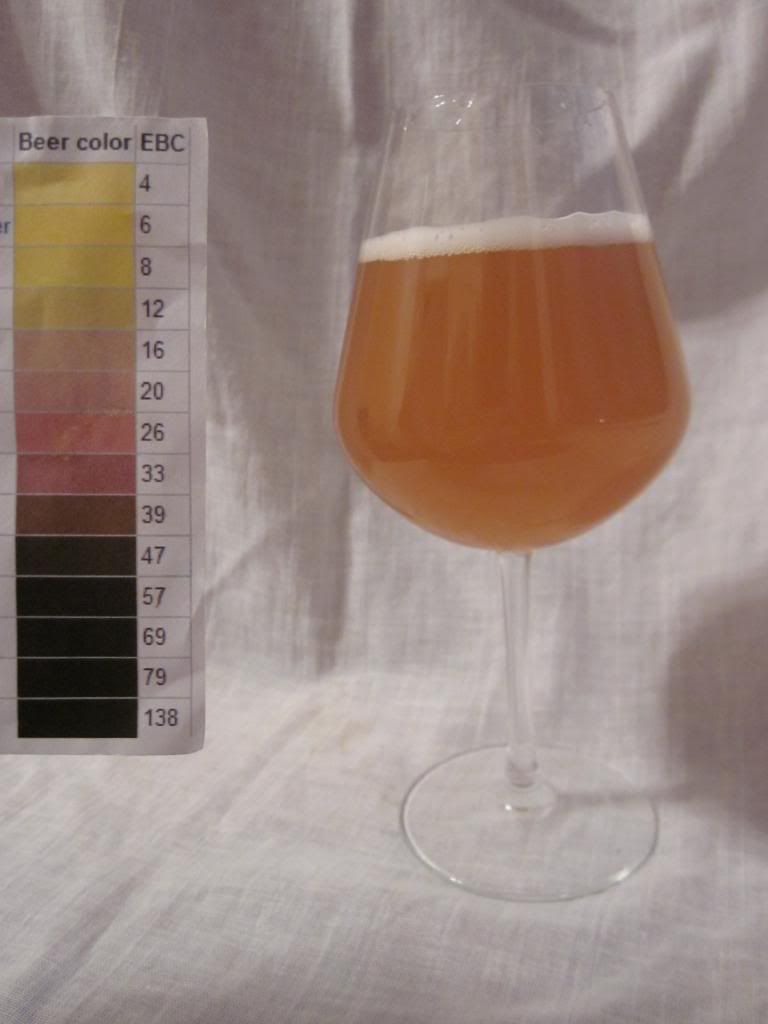
Appearance 3/3
It appears brightly enough in the bottle, but in the glass this beer is a cloudy glass full of earth color yellows, golden straw, and other shades of orange-yellow not out of place on a monarch butterfly or a  marigold garden.  Ridiculously small bubbles flit and dance their way to the top of the glass to sustain a ivory head that left a bit too soon.


Flavor 18/20
Given the reputation of the lychee fruit and the sweet aroma that made up one third of the nose, one could expect the first tastes to be very sweet as they contact they tip of the tongue.  Well, you know what Samuel L. Jackson says about assumptions...


The first flavors are actually quite neutral and sparkling with carbonation before the acidity takes the reins and refuses to let go.  It fades in with a champagne's dryness, but is instantly more acidic and sour once detectable.  Holding this beer in the mouth is full of a salty mineral note and lemon's acidity sans sweetness.  There are also notes of green apple.  It also grows more bitter in the mouth, leaving the hints of champagne further and further behind.  The origin of the growing bitterness is a mystery, but undoubtedly aided by the oak and the earthiness from the cinnamon, even if at this time no cinnamon flavor is detectable.  This is a nice wild ale combination of sour, funk, fruit, and the wood gently supporting them all.  The finish is a lingering, mouth-watering swallow that finally shows the cinnamon in a very subdued and appropriate role both in its flavor and with a slight tingle on the back of the tongue.  A good burp also brings back the cinnamon for a second visit.  The aftertaste is more bitter than sour, but even that flavor is timid at best.  However, despite the lack of lingering flavors, the mouth continues to salivate for quite some time.

Mouthfeel 4/5
This is a medium-bodied, highly carbonated beer, with invisible alcohol.  There is a tingle after the finish, but this could be from any number of contributors: alcohol, cinnamon, or acids.  Lots of flavor, but this beer never seems weighed down.  It has a crisp, lively mouthfeel that make it a perfect candidate for summer days or when you need a simple quenching.

Overall Impression 8/10
Not a bad sour by any means, but it's a far stretch from tasting like lychee.  The lychee was certainly present in the initial aroma, but was found lacking in any other aspect of the brew.  Color was typical for a sour and the carbonation, early on, went a bit beyond refreshing and bordered on distracting.  Its positives are the aroma, the strong sour, green apple and funk flavors, hidden ABV, and the easy-drinking body.  On a personal note, I really appreciated the subdued cinnamon as that particular spice has a tendency to overwhelm many of the beers to which it is added.


Total 43/50
Full disclosure, my experience with sours is limited.  In that same vein, my recollection of what lychee fruit tastes like is vague and based on impressions from a long, long time ago.  That said, this beer did not find cause me any trouble in getting to the bottom of the bottle.  It was crisp, flavorful, and of course sour.  Overall, its mostly sour with a bitter kick toward the end.  Unfortunately, there's not much sweetness to balance the sour and it results in what I feel is a rather simple creation.  I don't know when this was last bottled, but being that there is a large amount of sediment (and the high carbonation) in the bottle, I can infer that the yeast/bacteria continued to eat the sugars, perhaps leaving the beer much less sweet than when fresh.  Maybe.  Did anyone who had this beer fresh find the lychee and sweetness lacking?  Please feel free to comment.  There's plenty of the sour flavors, but in a beer that promises oak, sour, cinnamon, and the exotic ingredient of lychee fruit, just "sour" won't cut it.