Showing posts with label Boston. Show all posts

Wednesday, January 23, 2013

Pretty Things - X Ale

Let me first toss out a big ol' "thank you" to my wife who picked up this and several other bottles on a not-so-recent trip to Boston.  Normally, I'd never have access to this and I always appreciate something new and different.  Another reason I'm stoked to be reviewing this bottle is that it's a style of beer that I am currently unfamiliar with.  Zero experience.  Nada.  Thankfully, Pretty Things does a pretty great job of describing its history right on the label.  I shall reprint it here:

"Mild was a hugely popular style for more than a century (1800 - 1900s).  Here, we have released two Mild ales side-by-side: two beers from opposite ends of that period, brewed by the same brewery. If you drink both, you will drink the same brand from the same brewery, separated by 107 years.  Over those years, Mild changed considerably: something these beers amply demonstrate.  Though bearing the same name, X Ale, in character they could hardly be more dissimilar.

By WW II, Mild was firmly established as Britain's most popular style of beer, but the years had not been kind.  The wars years in particular had taken their toll on Mild, reducing its alcohol content.  There had been other changes too.  For example, the colour.  1945 X Ale was much darker, brewed from a blend of 5 malts and dark brewing sugar.  Wartime shortages also dictated the use of flaked barley.  This 1945 Mild contained just a fifth of the hops of 1838 version.  This is Mild as we know it today:  a low-gravity, lightly hopped, dark beer.  Drink the two side-by-side to see these changes in action.
                             -Ron Pattinson, January 2012

Also, I would be remiss if I did not include the thank-you note/history located on the front of the label.

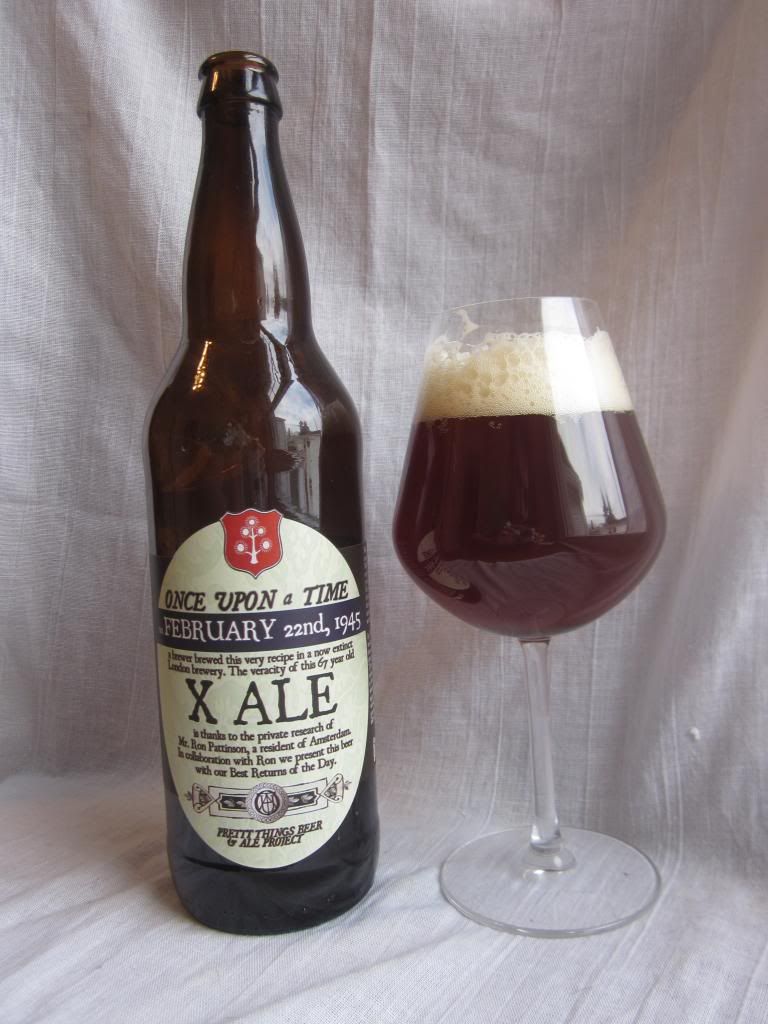
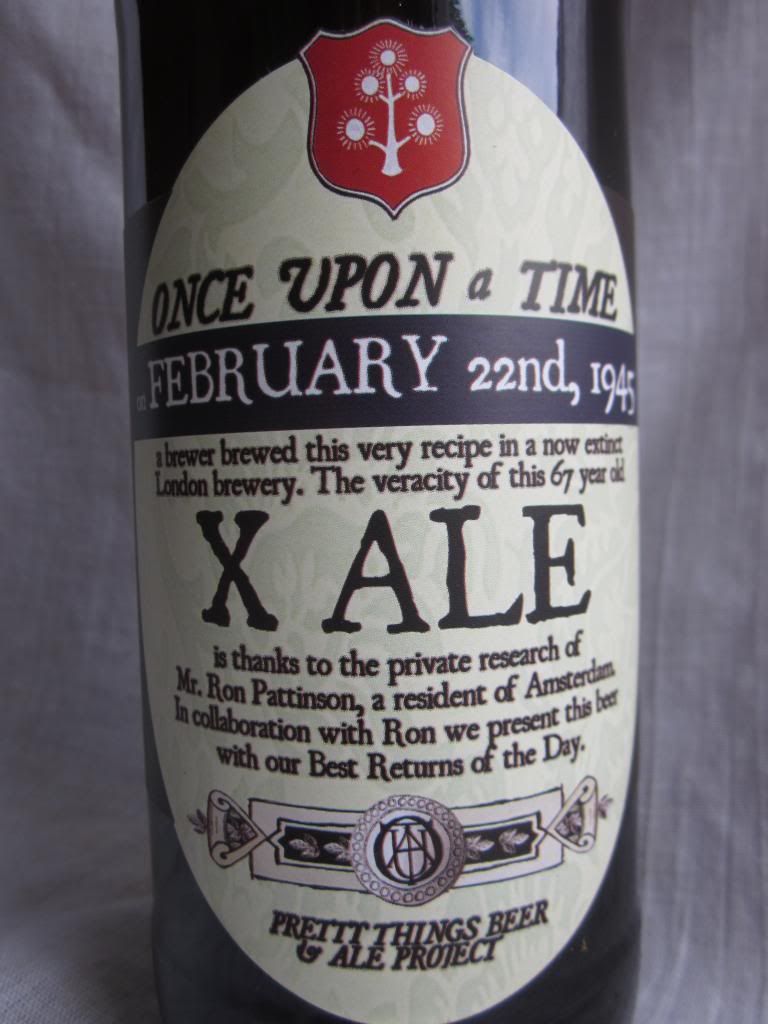
"Once Upon a Time on February 22nd, 1945 a brewer brewed this very recipe in a now extinct London brewery.  The veracity of this 67 year-old X ALE is thanks to the private research of Mr. Ron Pattinson, a resident of Amsterdam.  In collaboration with Ron we present his beer with our Best Returns of the Day.

First batch brewed Feb. 22nd, 1945
This batch brewed Feb 14th, 2012"

It sounds like each version has its own benefits and while I don't have each one to do a side-by-side comparison I believe that investigating this historically researched brew for myself will be a neat learning experience.  Let's pour!

Aroma 8/12
Things are very malty here.  This is very akin to a sweet brown ale with cocoa and molasses as the main contributors.  A lactose sugar's aroma is also detectable.  Overall, this is a very simple bouquet, on par with beers that probably put forth much less effort in their brewing and their historic research.

Appearance 3/3
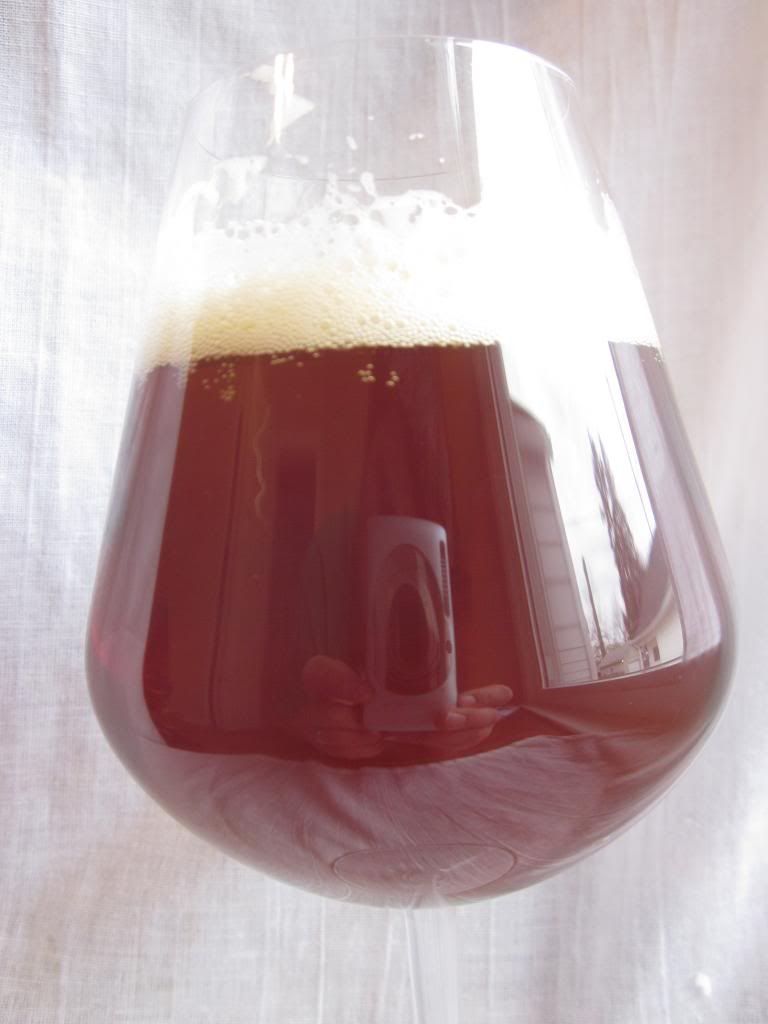
It certainly lives up to its brewer's name.  From the smell I was expecting a much darker pour, but was surprised to see it fall into the glass in a dark copper color, made to seem brighter due to its high clarity.  The copper also blends in its share of reds and magentas.  Be sure to take a moment to appreciate this one.  The head was excellent.  It's generous in size, egg shell in color, offers some lacing, and better than average retention.  Good work!
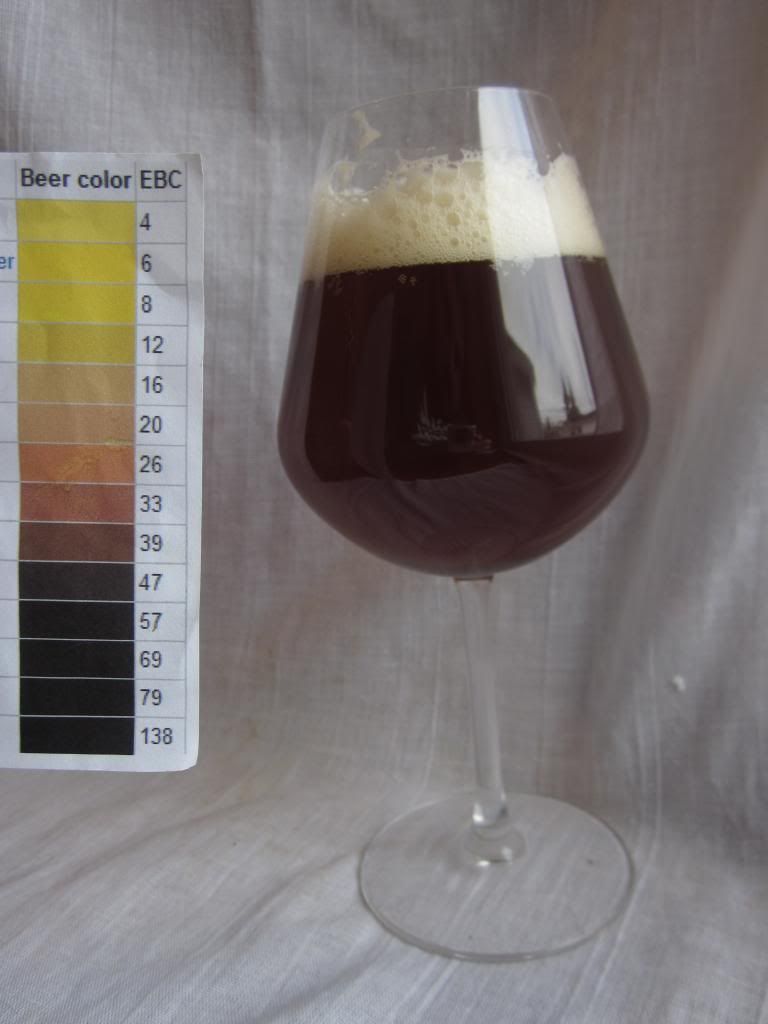
This was the first shot.

But this shot showed more true-to-life color.
Flavor 16/20
As much as the color was a surprise in the glass, the flavor is even more so in the mouth.  Things are not at all what one would expect when a bright, clean, citrusy flavor is the first in the mouth.  When sipped slowly, lots of neutral malts (crystal?) become apparent as well as a weak, watered-down citrus.  The beer is anything but dry at this point and certain to satiate thirst.  A quicker drink reveals more flavors, but it turns out that those are merely hiding in the finish as the backbone itself is quite lackluster for big flavors.  The finish on the other hand, is the high point of the beer.  It reverts back to the sensations in the aroma and gives a nutty, lightly bitter, dry finish with the roasted malts showing through and being a very nice addition.  The aftertaste is nothing much to mention other than a gently fading bitter from the finish and eventually a lingering citrus.

Mouthfeel 4/5
A light to medium mouthfeel is here, despite the malt emphasis.  The carbonation is abundant, but never comes close to prickly.  Instead, it serves as a texture and helps the mouth water through the dry finish.  The ABV is invisible and well it should be because further inspection of the bottle shows only a 2.8% ABV!!  Great googly moogly!  It's a small wonder that Brits could sit down and pound round after endless round with brews like this on tap.

For those not understanding the "great googly moogly" reference.

Overall Impression 7/10
So what's the overall impression?  I dig it.  It's like a refreshing brown ale or porter, but with much less body and definitely able to be consumed one after another after another.  Its shortcomings are the simplicity and lack of other flavors that other brews of this flavor profile have successfully incorporated.  Yes, the citrus helps keep things refreshing.  Yes, the bitter helps balance the malts while falling far short of overpowering them.  However, porter/brown ale flavors like this can also incorporate other flavors like molasses, caramel, dark fruits, brown or candi sugars, cocoa, or dark fruits.  I felt this stopped far short of its potential for flavor, even if the purpose it currently serves as a quaffable session ale is a noble one.

Total 38/50
It's difficult to give an unbiased review for this beer because beer has had such varying roles over the decades, let alone in different geographic locations.  I'm looking at this brew through "21st century glasses" and it was not made for that time.  For the current day and age, this beer feels light in flavor and watered down.  Today's priorities in the United States are on monster flavors to compensate for decades of flavorless macrobrews.  This results in intense flavors that often require the beer to be sipped and make it far less quenching.  Also, this beer is a British recipe.  Brits for many years placed a high value on highly sessionable beers because one could drink for extended periods of time and not become intoxicated.  Today's drinkers sometimes demand high ABVs in the brews to go along with the potent flavors.  It's clear that this beer is from a different century and from a different continent, but does that make it bad?  My vote is "no."  This is a version of brown ales and porters that provides those flavors in a lighter variation and can still be drank year round.  It's not a beer for today's drinker, but I believe that was Pretty Things' idea the whole time.  Cheers to Pretty Things for the history lesson on Mild ales, the trip to the past to actually taste one, and the character to not let old beer styles go extinct!


Monday, April 9, 2012

Samuel Adams - Boston 26.2 Brew

Drinkers, today I am blessed with a special treat of sorts.  I have been gifted a bottle of Samuel Adams Boston 26.2 Brew.  Since I live in the Midwest and the Boston 26.2 Brew (what a mouth full!) is only in Boston and only "available at race-related events, as well as pubs and restaurants along the Marathon route and around Boston," I am very stoked to be sampling this brew.  A HUGE thanks goes out to my east coast friend that made this possible.  With the Boston Marathon only a week away, it's time to review this very limited brew.

One more very cool aspect about this beer is that it is brewed in the Gose style.  No, not geuze (or gueuze depending on your spelling), but a Gose style.  If you don't know much about it, you're not alone.  It's a style that was all but extinct, but has been kept around by some rather dedicated breweries (read all about the Gose style here or its Wikipedia article).  Long story short?  It was originally a spontaneously fermented beer made with malted wheat (50% of grain bill), coriander, and salt.  Not only is this a great opportunity for me to try a beer exclusively available on the east coast in Boston, but also to try a style that I have never seen before let alone tasted.  Big props to Samuel Adams for not only showing some love to it's home market, but for also brewing a style that is not only "not popular," it barely exists!  They're educating beer drinkers once again and it's no surprise.  I'm very excited to crack this open and see what this style is all about.  Let's pour!


Aroma 10/12
A simple bouquet here, but it's effective.  A lemon zest citrus is the initial primary aroma, but there is a sweetness behind it, as if it were cream-filled but in a much more subtle way.  A tickle of Belgian spice is behind that and I attribute it entirely to the coriander used in the making of this beer.  It's like a light Belgian with very little spice, plus a little bit of lemon.  Ahh, and now the wheat begins to come forward as the beer warms.  It makes the beer smell much less "light" and definitely shows the origins of the lemon aroma.

Appearance 1/3
Somewhat pilsner-esque in appearance: extremely high clarity, no notable ascending carbonation, bright gold in color with hues of the wheat sheaves located in the center of the glass.  Carbonation was one finger tall, offered less than average retention in the pure white head, but remained to cover the surface.  No lacing.  I imagine the acidity has something to do with the poor head & retention, but if there is one thing I expect an established, "bigger" brewer to do, it's to nail the technical aspects.  This was not up to the high level that Samuel Adams has previously established.


Flavor 16/20
This is definitely its own character!  Loads of malted wheat is present right off the bat, not only in a substantial and pleasing mouthfeel, but also with grain and lemon flavor.  To those worried about the salt used in the brewing process: don't be.  The salt is initially quite noticeable, but eventually blends in as the palate grows accustomed to the newcomer.  The backbone is mostly a continuation of the wheat flavors, but adds the salt in a way that compliments the light citrus astringency.  This is NOT like shaking salt into a summer shandy.  The wheat and salt are both far too delicate.  They neither insult the drinker with too much sweetness, nor disgust him/her with too much salt.  I can see how either could happen, so this is a delicate balance to achieve.  A quick slurp brings forward the cream-like sweetness and the citrus.  The finish is a classic wheat taste: very fresh with pure grain flavors and a crispness that ends in the lightest of bitters.  The aftertaste is mostly clean but does leave the faint citrus and bitter remnants of the wheat.

Mouthfeel 5/5
As mentioned earlier, all the wheat in this brew give it a much more substantial body than one would normally expect in a beer with flavors this light.  Overall, the body is medium-light, but seems lighter with the lively carbonation.  The first sips from the bottle were nearly champagne-like in amount, but not in texture.  While it does fade rather dramatically toward the end, there is still enough to make this a superb drink for the summer.  I would definitely encourage a wider distribution in the summer months.


Overall Impression 7/10
While I have no other gose style beers with which to compare this beer, from everything I've read, this seems to be a fine, lighter representation of the style.  Most references make reference to a "strong saltiness," "lemon tartness,"  and a "characteristic sourness," (the last being given by the wild yeasts that originally were used in its spontaneous fermentation).  This beer definitely does not possess the "stronger" characteristics of the attributes listed, but for a beer that's still trying to gain a foothold after being extinct on two separate occasions, maybe that's wise.  The authenticity will come with the demand.  There was no sourness present, but the coriander and salt certainly were.  A very refreshing brew that I certainly prefer to many of the shandies, hard lemonades, and "summer ales" currently available on the market.

Total 39/50
I enjoyed this beer's excellent wheat characteristics and the noticeable presence of lemon.  It's a welcome alternative to the overly-sweet, lemonade-tinged brews that come out of the woodwork every summer.  The subtlety was a nice change of pace, but I sure would like to see a more authentic type of this beer.  While the aforementioned characteristics were appreciated, this beer's lightness shows that it was indeed made for the runners.  Again, not that I have anything to compare it to, but it sounds like this beer was made of sterner stuff back in its heyday and now I'm curious of it's original form.  Now, can you give a richly flavored anything to someone that has just finished a marathon?  No.  In fact, I can't even imagine the rich flavor that this brew would attain after 26.2 miles.  Heck, I bet a caramel flavored rice cake would taste like a crème brûlée exploded in your head.  However, I think it's safe to say that most people that drink this will not have just run a marathon and might appreciate that bit of sour to compliment the lemon and salt.  Oddly the coriander didn't play that big a role in the flavor, but it was still nice to have in the aroma.  As it stands, it's no wonder they're serving it after the Boston Marathon.  This would be a God send after running a distance that borders on cruel and unusual punishment.  A lighter-bodied wheat beer that has plenty of carbonation should be on every runner's wish list.

Sam Adams, much like in my "novice" drinking days, you have introduced me to a style that I might not have otherwise tried.  It seems to be what you do best!  Thank you for making this style accessible to a much larger audience than it has had in decades and for giving other summer "refreshers" something to shoot for.  This is more than your average "lawnmower beer," and I'd love to see it in a more authentic setting (hint hint).


SOURCES:


Thursday, August 11, 2011

Samuel Adams - Latitude Series (Part II)

Well, judging from the popularity of the first part of this two part series there are a fair number of you waiting to hear about the last three varieties of hops involved in making Samuel Adams' Latitude 48 Deconstructed Series.  I'll just get right down to brass tacks, then.  Let's pour!

The fourth hop: SIMCOE 


Picture is my own.  Bottle art image used without permission for educational purposes only.

Aroma 11/12
This is so nice I wish brewers would make an IPA out of this hop alone.  Brewers: please consider that a challenge.  The aroma was abundant the second I opened the bottle, not even waiting for the pour.  It is almost champagne-like with a wood/nut aroma in close contention.  There is a light pine and grass note in the background that seems to be an afterthought, but as the beer warms it blends superbly with the champagne and citrus smells.

Appearance 3/3
Color is the same reddish-copper as the others, but the head is (forgive me) "head" and shoulders above the rest.  It is thick, frothy, stiff, becomes lumpy, and leaves an almost solid lace on my glass.  Excellent!

Picture is my own.
Flavor 19/20
An immediate bitter splash is the bold introduction for this brew and dives immediately into its backbone.  On the tongue this beer has just as much molasses as the color would have us believe, but with some woody tones, and a sharp, sour citrus note that shines through it all.  After being held in the mouth a bit, a sugar sweetness also develops.  The finish is a fantastic IPA bitter finish.  It is exactly what one should expect from an IPA.  It builds off the prior sour flavors and really uses them to beautifully transition into a resinous bitter.  The fade from one to the other is very tasty and very cool.  The aftertaste is surprisingly clean, given the bitter finish, and also leaves the mouth dry.

Mouthfeel 5/5
Did you notice I didn't start the flavor section "Again with the distracting carbonation," like all the others in this series?  That's because it didn't have it.  I'm not sure how.  I stored them the same way, opened them the same way, handled them the same way, etc.  Its mouthfeel is definitely different and I shall describe it as a certain well-copyrighted Disney character: "Practically perfect in every way."

Overall Impression 9/10
I am very impressed with this offering.  Excellent, unique aroma, superior appearance, distinct flavor transitions, and a perfect stylistic mouthfeel are definitely ingredients for this beer's success.  What else can I say?  Wow.

Total 47/50
Yeah, I'm surprised by the score too, but I stand by it.  This is an amazing hop!  After re-reading all the flavor sensations it gave me (molasses, sharp citrus, the crazy fade to bitter/pine), I thought to myself, "How can anyone not like beer?"  This is a fun beer to drink a glass of and since you receive two, almost worth the price of the 12 pack itself.  Seriously.  I haven't even had the last beer of the bunch yet, but unless it tastes like unicorn tears and plays the theme from the ORIGINAL Transformers Movie (1986!) when it opens I think that is a safe claim to make.


The fifth variety: ZEUS


Picture is my own.  Bottle art image used without permission for educational purposes only.

Aroma 9/12
Starting with rich molasses-laden malt, this beer quickly gets to work showing its hop profile as it warms.  It starts with a faint grassy aroma, but gradually transitions into a rich pine log sent.


Appearance 3/3
Head retention average, lacing is just as superb as the Simcoe hop.  Color is similar to prior varieties.


Picture is my own
Flavor 15/20
Again with the carbonation.  This beer starts out with a creamy malt, but switches almost immediately to a pepper and bitter resin.  Those two flavors grab hold and never really let go.  OK, there is a slight, dark, caramel undertone, but it is very faint in contrast to the other larger, more abrasive flavors and is not as large of a contributor to the overall flavor profile.  The caramel seems to grow stronger as the beer warms, either that or I am becoming more accustomed to the bitter hops as I go.  Either way, it's providing more balance even if it is a secondary flavor.  The pine notes also increase with warmth.  The finish has a sharp bitter that earns this the title "Bitterst of the Series," and also shows off more of the pine flavor.  The aftertaste is ink-like in its bitterness and nothing more.

Mouthfeel 4/5
The early, crazy carbonation deducts points, but the head earns some.  Also, this beer seems to fill the mouth more than any of the other varieties, despite its similar body.  It foams up in an interesting way.


Overall Impression 6/10
Not bad, but not thrilling either.  Simpler aroma and flavor than the others, though.  Definitely the bitterest hop of the varieties.  I see its potential in conjunction with other hops, but it offers little on its own.

Total 37/50
I partially believe that this score is based on having all of the essentials of an American IPA, but none of the finer things.  Sure, it's bitter, tastes like pine, has some malt, etc.  However, it misses out on some of the characteristics that truly set apart an excellent IPA like citrus, floral, complexity.  As the score would indicate, this does not make it a bad beer, but there are definitely better our there.


The last is the combination of all 5: Latitude 48


Picture is my own.  Bottle art image used without permission for educational purposes only.

 Aroma 9/12
Again starting of with caramel and molasses malts, but slowly evolving into a grass/funk aroma.  This is short lived and evolves again into a more citrusy version (light orange, canteloupe) with an overshadowed pine note.  The final evolution stays (thankfully) and smells very crisp and light.


Appearance 3/3
A repeat of the prior two beer's über-lacing.

Picture is my own.
Flavor 16/20
Creamy up front and peppery (not the first time we've seen that combination), it moves quickly to a lightly grassy/pronounced pine backbone with plenty of malt sweetness and a touch of citrus.  This is a very nice combination of a lot of things that are all going on at once.  The finish provides more pepper and bitter, but follows it with a brief, creamy, sweet wave that never overcomes the two despite is distinct appearance.  The malt is also more present in the finish that one would expect in an IPA, but not necessarily a terrible thing.  The aftertaste allows a fading, sharp bitter to take hold, but it must be truly waited out before it makes its appearance.  As the beer warms it takes on a very nice blend of malt and citrus hop.

Mouthfeel 4/5


Overall Impression 7/10
A caramelly version of the style, but a solid one nonetheless.  Extremely high technical prowess in the brewing process is evident in every aspect of this beer.  A bit more of the citrus to keep things more refreshing perhaps would have been appreciated.  This seems dark, especially for a summer seasonal.

Total 39/50
Obviously more complex than some of the other varieties, but that doesn't necessarily allow the best of each hop to show.  There are characteristics of each present and it's really fun to pick each one out after drinking the whole series.  Perhaps, its biggest fault is to not focus on one or two defining characteristics and instead going for all the the characteristics inherent in five different varieties of hops.  Who is to say which is better, the single flower or the bouquet?

A picture of the top of the variety pack.  Very cool.

And that's the game!! It has been a lot of fun going through the different varieties of hops and really isolating flavors, but eventually there had to be winners and there had to be losers.  Here is the final roundup.

Simcoe: 47/50
Ahtanum: 39/50
Latitude 48: 39/50
Hallertau: 38/50
Zeus: 37/50
East Kent Goldings: 27/50

Hopefully, this helps some of you homebrewers as well!  I know it will certainly aid me as I continue to try new and amazing beers and try to really pick individual flavors out of the beer.  Once again, cheers to Samuel Adams for a great idea that caters to homebrewers and the craft beer community!!